Wednesday, 26 October 2016

Interview with Wyl Menmuir


Wyl Menmuir is a novelist and editor based in Cornwall. His bestselling debut novel, The Many, published by Salt, was long-listed for the 2016 Man Booker Prize. Wyl has also been published in A Space to Write, a book exploring authors’ creative writing practices, in nature and academic journals, and he writes regularly for a range of national magazines and blogs. Wyl lectures in creative writing and is also currently writer in residence at Richard Lander School in Truro.
http://wylmenmuir.co.uk/


Interview by Karen Pegg

Congratulations on your recent nomination of The Many to The Man Booker Prize longlist. For a first novel this is an incredible achievement. What was your first reaction?

It’s a bit of a cliché, but I didn’t really believe it when I got the message from my publisher on the day the longlist was announced. It was incredibly surreal, as it wasn’t even on my radar. I follow the Man Booker Prize each year and try to read at least the books on the shortlist, so to be nominated for the prize was unreal.

Which Man Booker winning novel do you wish you’d written?


Photo credit: Dave Muir
There are so many I wish I’d written, though if I had to pick one, it would be Kazuo Ishiguro’s Remains of the Day, which is one of my all-time favourite novels. It’s incredibly powerful, incredibly moving, but at the same time, entirely understated, like so much of Ishiguro’s writing. It’s everything I want out of a novel, in that it explores big issues, though from a fascinating angle, and - as importantly - it stays with the reader long after the first reading.

Timothy (the main character in The Many) is an outsider looking in, trying to belong but rejected at every turn. Is this sense of rejection or loneliness something that you have witnessed or experienced yourself?

I think we’ve all had experiences of being both outsider and insider at different points in our lives. We’ve all been rejected and lonely at times, and at others have rejected and perhaps made others lonely, so I think this aspect of Timothy’s experience is perhaps one readers can sympathise with on some level, although hopefully in not so extreme circumstances.

The sea and Perran’s house are both strong characters in The Many. How important is a sense of place to you in your work?

Hugely so. For me, Perran’s house, the village and the sea are as much characters as the fishermen or the woman in grey. I knew the landscape would feature heavily in the novel from the beginning, from all the villages along the coast that I visited as part of my research, through to my own writing practice, which is very much rooted in the landscape and being part of that landscape.

One of the themes you touch on in The Many is that of ‘going back’ or trying to ‘go back’ to a place which holds memories of a happier time. Have you, like Timothy, ever tried to ‘go back’ and if so, how did you find this experience?

There’s a popular saying that you can’t step into the same river twice. I think the same is true of anywhere we visit. Once we have left, the place we visited exists only in memory (which in itself does strange things to a place), and I find when I return to a place of which I have a strong memory, it’s never really the place I remember. I often feel, as Timothy feels at one point, that things have been moved around when I return to somewhere I know well – street signs, buildings, roads and so on. Or sometimes it’s just the feeling that the place you visited has moved on since you were there. It would be strange if that was not the case, but I wanted to play with that idea of places remembered.


The Many was published during the Brexit crisis. As a writer, how do you feel post-Brexit and how do you feel it will affect you as a writer? With specific reference to the UK fishing industry, are you in any way optimistic that freedom from EU rules will have a positive effect?

How do I feel post-Brexit? It’s such a complex thing I struggle to get my head around it, although I was distraught at the outcome of the referendum. As a writer, I have no idea how it will affect me, though I’m certain it will feed into my writing, perhaps flowing into the collective anxieties of some of my characters as it has into my own.

I wasn’t trying to make a particular political point about Brexit, although I was very aware of the feelings of fishermen I spoke to about quotas and things like that. I think cooperation on a scale larger than this island is essential when it comes to looking after the seas, especially if we want to continue to have the privilege of taking fish from them to eat, and I was really dismayed at the referendum outcome, as I believe it could be a big step backwards for the health of our seas. We have a huge responsibility to care for and protect the oceans and that was at the back of my mind as I was writing The Many. I surf and sail and spend a lot of time by the sea with my family, and we see the amount of plastic that washes up on the shore. We try to do our bit by getting involved in the beach cleans at our local spot, but it sometimes feels quite overwhelming the amount of damage we’ve already done to the seas.

Reading the book is an intense experience, with its haunting and nightmarish quality. How intense was the writing process for you? Did you find you were ‘dreaming’ or ‘living’ this book in your subconscious, or writing chapters you had dreamt?

The novel unfolded it to me almost entirely unplanned, so yes, I was certainly living the novel as I was writing it. I very rarely knew what I was going to write until I had written it and even then I surprised myself when I read it back. So much of it was unfamiliar, dragged up from somewhere in my subconscious and I learned to go with it, as I knew the story was unfolding itself in a way I couldn’t have possibly done had I written a plan, sketched out the characters and their journeys and had a beginning and endpoint in mind.

During the writing process do you share drafts with family or friends or do you prefer to save the finished result until the end?

I shared sections of the novel with my MA Creative Writing groups, which was hugely helpful in terms of knowing how far I could push the reader before they became alienated from the novel, how much I should explain and how much I should withhold, although it was different with different readers. On the whole, though, I don’t share my writing with my friends and family until I’m fairly happy with it. I want it to be as polished as possible before any readers get their hands on it.

In your acknowledgments, you thank Chris for ‘a singularly useful piece of writing advice – finish what you start’ Is finishing something you struggled with as a writer?

Chris and Bec, who created the Write Track app that I used while writing the novel, use ‘Finish what you start’ as a strapline for the app and it’s definitely the best piece of writing advice I have taken. I had a dread of coming to a grinding halt and leaving a half-finished novel in a drawer, as one of my motivations for writing the novel was to be an example to my children. If I can’t finish the projects I start, I’ll have no credibility when I’m encouraging them to take on risky projects, doing the things that really matter to them. Life’s too short not to finish the important things.

Much of The Many was written travelling around the north coast of Cornwall in a campervan. But then you exercised your D.I.Y skills and built a desk. Is writing on the move or outside of your normal surroundings something you recommend? And how does writing at a desk differ from a more ‘nomadic’ process?

My guilty secret here is that while I did build a desk on which to write my second novel, I’ve not really used it much. I think being transient might be integral to my writing practice. I’m too restless to sit at a desk for any length of time, and quite often an idea will occur to me at a really inconvenient time and I have to get it down on paper before it disappears, so having a notebook and a pen with me is the most important thing. Being on the move helps with the writing process – I’m not sure why or how, but it seems that way to me, and the campervan is useful for that. It’s like an office on wheels.

Part of this book was written on an Arvon course. Was it useful for you to be in a community with other writers?

Incredibly useful. Being around other people who are all struggling with the same sorts of problems is really motivating, and it’s great to feel you’re being useful to someone else as well, as sometimes the whole writing process can feel slightly solipsistic.

Do you believe that a writers’ retreat can be a turning-point in a writer’s career?

It was for me. I was encouraged to take creative risks with my writing that have paid off and started me on a path that has already taken me to some amazing places. So, emphatically, yes.

If you could spend a week in residence with another author, living or dead, who would that be?

Although I think it’s probably a mistake to meet your heroes (they always disappoint), I think I’d spend a week with Gabriel García Marquez.

Did you grow up in a world of books?


Yes. Both of my parents were readers and always read to me. I had my own books growing up and we went to the library at least once a week. After bugging them incessantly about it, the librarians ended up giving me extra tickets so I could take out more books. And even then I went back at least once a week.

If we could travel in time and catch a glimpse of your childhood book-shelf, which authors would we find there?

Tolkien, Alan Garner, Susan Cooper, Robert Westall, Michelle Magorian, Wilard Price, Roald Dahl, T H White, Richmal Crompton, Conan Doyle, for starters.

Do you remember your first piece of creative writing?

I remember having an idea for a poem while I was in the bath when I was very young. I jumped out of the bath and wrote the poem, dripping wet at the top of the stairs. I don’t remember what the poem was, but I still get that sense of excitement when something I’m working on starts to come together, or when that idea occurs, seemingly from nowhere.

There’s been a lot of criticism of Creative Writing courses by authors and academics such as Hanif Kureishi. To what extent do you agree or disagree with the idea that creative writing can be taught? What made you decide to take an MA? Was this an academic decision, or specifically to help you achieve publication?

I think you can be guided, supported, encouraged, though taught is a problematic word. You can’t make someone a writer, but you can provide the right environment for them to explore what it is to be a writer, and you can model for them what being a writer is to you, which can be helpful. I wanted to do the MA partly because I love academic study (I’m a geek like that) and partly for the discipline. I trained as a journalist and I think I’ve never got over that journalistic requirement of needing a deadline to kick me into gear.

Are you working on your second novel? Can you tell us a little about it?

Yes, I’m working on a second novel at the moment. It’s certainly as ambitious as the first, if not more so, but it’s a very different novel. Other than that, I’d rather it was a surprise.


Did you always know that you wanted to be a writer?

Yes. Always. Being a novelist has been an ambition since I remember being able to thing. To be someone who can conjure up a whole world from their imagination, transport a reader to somewhere else and bring them back to the world a changed person – I think that’s possibly the best type of magic there is.


Wyl Menmuir will be teaching at A Chapter Away residential writing retreat in 2017. Watch the website for details.


Wednesday, 19 October 2016

60 Seconds with Katharine D'Souza

By Gillian Hamer

Katharine D’Souza writes contemporary fiction about families, friends, and the issues they encounter. She’s published three books set in Birmingham, UK, and also runs a writers’ group, is chair of a festival of writing, undertakes freelance editing work, and works part time at a university. All of this cuts into her reading time, a situation which annoys her. Her most recent novel, No Place, came out in August.

Hello. Tell us a little about you and your writing. 
While I’ve always loved to write stories, I didn’t take it seriously until I went part time at work over ten years ago and now find that balancing my own writing, running a writers’ group, editing, and working part time in an office is a good combination to ensure I both get some writing done and have something to write about.
What’s the best thing about being a writer? 
Well, I’m not quick with a witty comeback, so I like the opportunity to write a draft, delete it, rewrite it, revise, etc until the lightning-fast response actually appears in print.
And the worst? 
Writing first drafts. I very much prefer having material to rework.
Why did you choose your genre? 
I want to write about the way we live in contemporary Britain, so contemporary fiction set in British cities is the perfect fit for me to explore the issues I think about.
Do you have a special writing place? 
I am lucky enough to have a study of my own, but writing the first draft often happens in cafes, on trains, while lying on sofas, anywhere I can force myself to do it, really.
Which four writers would you invite to a dinner party? 
Oooh, can they be from history? Because I’d love to invite Jane Austen, no competition. There are a lot of things I’d like to ask her. Though I’d also like to talk to J K Rowling and Maggie O'Farrell as they’re my modern day inspirations. Then, because meeting her at a Puffin Club event when I was very small was probably the seed of me wanting to write, Noel Streatfeild, so I could say ‘thank you’.
If you could choose a different genre to write in for just one book – what would it be? 
Tough choice – perhaps fantasy. I enjoy reading it, but have never tried writing it. I think I’m intimidated by the complex world-building in the books I’ve read.
What do you know now you wish you’d known at the start of your writing journey?
The importance of independent critique, from writers’ group colleagues or an editor. Finding the courage to request and then listen to honest feedback is what really helped me improve as a writer.
What is your proudest writing achievement to date? 
Whenever I hear feedback from readers. When someone tells me how much they enjoyed a book, or talks about the events or characters with insights which show how much they identified with the issues, that’s what makes it all worthwhile.
What are your future writing plans? 
I am working on a new novel. But it’s at first draft stage. Which means I’m hating it. Watch this space!
Find out more :
Website: http://www.katharinedsouza.co.uk/

Twitter: @KatharineDS


Wednesday, 5 October 2016

How To Write Subtext

By Libby O'Loghlin

Subtext
  • What’s its purpose?
  • How do we spot it?
  • How does it work?
  • How do we write it?
Exercises

From Wikipedia:
Subtext or undertone is any content of a creative work which is not announced explicitly by the characters or author, but is implicit or becomes something understood by the observer of the work as the production unfolds. 
1. What’s its purpose?

When a character’s actions, mannerisms or words don’t quite ‘sit right’—when they don’t match that which we perceive as their intentions—it raises questions in a reader’s mind. And when a reader has questions, it generally leads to that golden action known as Page Turning. This is to be encouraged!

Psychologically speaking, readers like to think we can tell when there is incongruity between a character’s intentions and their actions. In evolutionary terms, it’s necessary to be aware of inauthentic behaviour because it might mean there's a threat from those outside our tribe ... so we’re wired to be able to spot it.

Of course, reading isn’t exactly what you'd call a survival situation, but we learn an awful lot about the world and humanity when we read a good book, and we do like to think we can tell when something fishy is going on. And—if a story is written well—we will hang in there to experience that a-ha moment when our suspicions are proven correct.

2. How do we spot it?

Subtext can be found on two levels:

Between characters within the story (screenwriters call this ‘diegetic’); or

On the meta level: how the story is being told/the narrative voice (‘extra-’ or ‘non-diegetic’).

Jane Austen was a master of subtext. Her characters are full of innuendo and blushing cheeks and restrained civility: Austen’s was an environment in which one could not air one’s opinions nor say what one most desired, so characters had to find ways to say things to each other in a coded fashion.


One of the easiest ways to spot meta level subtext at work is to think of it as a joke or secret—something revealing—between the narrator and the reader; one that the characters themselves may not be aware of.


3. How does subtext work?

Level 1: Character

Level 2: Meta

1. Character. In storytelling terms, every character has at least two forces at work from within: fear and desire. Push and pull. They want something, but something is getting in the way. They fear something, but something propels them forwards.

This is story currency. It happens at every level: sentence, scene, chapter … It’s the only way to reach a state of change. (And we all know by now that without change, there’s no story.)

Luke Skywalker desires to get off the planet Tatooine and go on an adventure … but he’s an adolescent and he’s afraid of what’s out there. How could these conflicting forces manifest as subtext? Luke speaks with bravado, but we hear the tremor in his voice.

Frodo is loathe to take the ring all the way to Mordor … but he desires to do the right thing by his friends, by Gandalf, and by All Things Good. Frodo continues bravely, but we see the weariness in his step.

You see the pattern: Character does one thing … Reader/Audience perceives something different. There’s a gap.

2. Meta level: For subtext to work on this level, the writer should be utterly clear about the distinction between what’s going on in the the story and how the story is being told. It’s also critical the writer understands exactly what the character does and does not know (or need to know) about themselves and their environment. Clarity is key!

You can most often spot this kind of subtext where the narrative voice is an unreliable narrator (e.g. Huck Finn tells the story but over time we wonder if we can trust his judgement or credibility), or it can also work with a neutral third person narrative, where the narrative voice reveals information about a character’s context that changes the value of how we view the character. (Usually by juxtaposing the seen with the spoken.)

4. So how do we write it?

Level 1: Character

Level 2: Meta

1. Character. For subtext to work best on this level, we need more than simply a theoretic fear or a desire. We need to propel them into the realm of action.

1. What does each character desire? What do they fear?

2. What do they know? What are they trying to hide?

Once we can answer these questions, we can work on how to best mete out clues to the reader that all is not as it seems ...

Body. We have our character’s whole body to work with. What are their gestures and body language? How are they holding themselves? Does their expression fit with the words they are speaking?

Words. Think about the language they use. Are they trying to hide something? Or send a coded message? Do they therefore use words they wouldn’t otherwise choose? What's their tone of voice?

Objects. With which objects do they set the table when they loathe their guests? A vase of flowers to make them sneeze? An object that would incite a fit of jealousy?

In all cases, we’re looking to disrupt. To drop in something unexpected.


2. Meta level. The same questions can be applied to the narrative voice:

What does the narrator desire? What do they fear?

What do they know? What are they trying to hide?

This is where the selection and arrangement of story elements matters. The reader needs to get the message that despite the action in the scene, something else is going on. We can do this by manipulating choice of:

Objects and environment. (Mise-en-scène.) Does their chaotic home speak volumes about their state of mind, despite their neat attire?

Qualitative language. Intentional use of value-loaded verbs (‘ugly’ vase; ‘beautiful’ sofa) can tell us a lot about how reliable a narrator is.

Ultimately, the meta level of subtext is about holding the mirror up to the narrator or even the author. (The two are not to be confused with each other!)

Exercises

Exercise 1: Subtext in Dialogue


Coffee drinkers will go to great lengths to get a cup of coffee. Write a scene where a young woman is late for work. She dashes into the office kitchen and sees a hot guy reaching for the last coffee pod. She thinks he’s a 10 ... he thinks she’s incredible … but, more than that, they both want that coffee pod. What do they say to each other? How can you ‘show’ us they have an ulterior motive? What element of deceit or knowledge can you add to the mix to heighten the story stakes? (e.g. she knows he’s the new boss; he’s trying to hide that he’s been living in the office.)

Exercise 2: Subtext in Narrative Voice

Our protagonist has finished a painting and is hanging it on the wall in anticipation of presenting it to their spouse. Using a third person narrative voice—no dialogue—how can you let the reader know that, unbeknown to the protagonist, the painting is terrible? (You can also try with first person.) Remember, the same rules apply here to the narrative voice: what does the narrator know? What are they trying to hide?


Have fun!

--


Libby O'Loghlin is an award winning short story writer, novelist and ghostwriter. Her independently published YA mystery adventure, Charlotte Aimes, was longlisted for the 2015 Bath Children's novel award. Her latest project, a co-written literary thriller, will be released at the end of 2016. She is co-founder of The Woolf Quarterly, an online cultural publication based in Zürich, Switzerland. 
https://rowinggirl.com/


Wednesday, 28 September 2016

My Publishing Journey .... with Chris Curran

By Gillian Hamer

Chris Curran has written two psychological crime novels for Harper Collins Killer Reads. She left school at sixteen to work in the local library, returning to full-time education after studying for ‘A’ levels at evening classes. She was born in London, but at university in Brighton she fell in love with the south coast. She eventually persuaded her husband and family to move to Hastings where she is a proud shareholder of the recently reopened pier. Amongst other things she has worked as a primary school teacher, an actress and an editor.

Her first book, Mindsight, a psychological thriller set in Hastings was published last year. And her second novel, Her Turn To Cry, came out as an e-book on July 8th and publishes in paperback on September 8th.
In the second in our series where we investigate author's personal publishing journey from first scribbles to published novels, Chris gives us an insight into the highs and lows of her career.


What was the first short story or novel you wrote?

When I was a teenager I was obsessed by tragic women from history, particularly those who died young. So my first attempt at a novel was about Joan of Arc. I never finished it, which is probably for the best. I must have become more cheerful after that because my next two attempts at novels were comedies. I only have fragments to show for the years I spent writing them, but again that’s probably a blessing. My first published fiction was a light-hearted short story about a cheating husband, which appeared in Bella magazine. With my crime novels, I seem to have gone back to the dark side.

Was writing just a hobby to begin with for you?

I’ve always taken my writing seriously so I never considered it a hobby and I had ambitions to be published right from the start. Of course at first that only meant having my work read out in class or put on a school noticeboard! But even then I dreamed of seeing my name on the cover of a real book one day and was determined to make that dream come true.

When did you know you were ‘good’?

I’m not a confident person, however a few short-listings in competitions and some of my stories beginning to be accepted for publication convinced me I must be doing something right. A negative review can still shake my confidence however and of course that’s the one that sticks in my mind. I shouldn’t read them, but the lure is irresistible!

In fact, painful though it is, I have the feeling that it’s good for a writer to be full of doubts. That way you are always striving to improve.

What were your first steps towards publication?

Because I was doing a demanding full-time job, as well as bringing up three children, I started by writing short stories, mainly for women’s magazines. I used the small amount of money I made to fund two Arvon courses. These were incredibly useful not only for the intense writing sessions with the successful writers and publishing professionals tutoring the courses, but for practical advice about getting your work out there. It was also great to meet other students who were in a similar position and to share experiences and ideas. Quite a number of us have now published novels.

Chris's latest release
What has been your proudest writing moment to date?

It was an enormous thrill to see my first story in a magazine. When I opened the letter telling me it had been accepted I ran around the house screaming with excitement and terrifying my husband! One thing that really makes me happy even now is that my mum, who died before my novel was published, was so excited to read that story.

But I was most proud when Mindsight (recently picked as a Sunday Express best summer read) was chosen by such a major publisher as Harper Collins. It was unexpected because I didn’t have an agent and had submitted the novel during an open submission slot imagining I would hear no more about it. When the email from my soon to be editor popped up in my inbox, saying she loved the book and wanted to take it on, I was so surprised that I kept telling myself not to get excited because it was probably all a mistake!

Any mistakes you wish, in hindsight, you had avoided?

Losing faith in my writing at various times and letting it hold me back, although being the person I am I’m not sure I could have avoided that.

What do you know now you wish you’d known at the start of your journey?

That all the ups and downs along the way would feed into my writing and help to make it better.

What top 3 tips would you offer new and up-coming authors hoping to publish? 
  • Try to find a group of trusted readers who will give an honest and perceptive opinion of your fledgling work.
  • Don’t rush to submit before you are certain the book is the best it can possibly be. Ideally when you think it’s finished you should put it away and try to forget it for a while so that you can reread it with fresh eyes.
  • Brace yourself for rejection, but persevere.
Connect with Chris and her books:

Website: https://chriscurranauthor.com/

Facebook: https://www.facebook.com/Chris-Curran-421251721385764/?ref=aymt_homepage_panel

Twitter: @Christi_Curran

Wednesday, 21 September 2016

Snapshots from... Stockholm

In our regular series, we go exploring, finding out about the writing life around the world. Today Luna Miller (aka Monica Christensen) shows us around the Swedish capital of Stockholm.
Images by Peter Luotsinen


By JJ Marsh

What´s so great about Stockholm?

When in Stockholm, within walking distance there is always a green spot, a park or a big stone on a hill with a magical view. Built on 14 islands and with few high buildings the capital of Sweden is a picturesque and green city. Although the city shows itself at its best during the summer, with the bright nights, it can also be enjoyable to have a walk along the streets when big snowflakes are doing their best to cover the city in its winter dress. The cold wind bites your skin and the colourful city lights up the dark days and it gives the feeling of Christmas.


Compared with other capitals Stockholm is a pretty small city. The city of Stockholm does not even have a million citizens. That makes it a nice city for walking and biking, because distances are not big.

And then there is all this water around. You can both swim and fish in several places around the city. Not to mention all the areas where you can take a break during your walk beside the water and sit by the quayside, dangle your legs and just enjoy the view.

There are many boats taking you out in different directions into the archipelago. It´s actually one of the world most island-rich archipelagos, 30 000 islands. Too many to imagine, but it is amazingly beautiful.

Tell us a bit about the cultural life of the place.

Stockholm has a long tradition of theatre. As well as the royal theatre and the city theatre there are several small theatres with financial support from the city. There are also free, outdoor programmes in the summer. Mostly theatre, but also dance and music.

As all big and proud cities, Stockholm of course has a Royal Opera. But there is also a public opera that is more about experimenting with the art form and always singing in Swedish. I still have a problem to hear what they are actually singing but I really appreciate the thought.

The Cullberg Ballet have been world famous since the sixties. And it seems like, during recent years, more and more Stockholm contemporary dance companies are becoming established on the international scene.

The music scene is of course one of the biggest and a big part of the city’s pulse. Compared to the number of citizens Sweden has great international success in music. And of course, Stockholm is the centre.

The most conspicuous development in recent cultural life must be the explosive growth of new film festivals. Niched by ethnicity, gender, LGBTQ or thematic. Everyone wants their own festival and that is really exciting.


What´s hot? What are people reading? 

I believe that crime stories are the most popular genre. There are a lot of famous crime writers in Stockholm. And I think there is something very special about reading a book from your own environment. It makes it easier to build up the “inner picture”.

But there is also a big interest in other culture or just other ways of doing things, like the books of Jan-Philipp Sendker. “The art of hearing heartbeats”, about a romance in Burma, have made more than one Swede cry over the relentless faith of a loving couple followed by decisions that are really hard to understand. A Swedish book that got a lot of attention a few years ago was the true story about Katarina Taikon, a Roma woman, and her struggle for both her artistry (she was a writer) and the human rights of her people.

There are big investments being made into getting children to read. Modern technology and communication are still the most attractive alternative for many young people, compared to the slower art of reading. But when they read they enter the world of fantasies; anything from Harry Potter, vampires, space wars, dark angels to tiny creatures that live underground. Being a child of the sixties when social realism dominated children´s books I totally love fantasy stories for kids (and adults) to explore.

Can you recommend any books set in the city?

The most famous book is of course “The Girl with the Dragon Tattoo”. The City Museum even offers very popular hikes, with a guide who leads you in the footsteps of the characters. As if it had happened for real. A really interesting phenomenon.

Per Anders Fogelström has written a series of books, starting with City of my Dreams, about a family in Stockholm from 1860 to 1968. An important piece that helps you understand the city’s development during the last few centuries. Reading these books, you learn to know these families so well that you mourn the one who dies and eagerly welcome new-born family members.

Jens Lapidus takes the reader, with his books Easy Money and Never Fuck Up, into the violent and criminal world of Stockholm. Where a mistake is never forgiven and drugs mess up too many minds.

And of course I have to mention the most famous of them all, even if dead for many years. August Strindberg. One of his books, Röda Rummet (The Red Room), describes Stockholm more than a hundred years ago and the city’s hottest spot both then and in the early eighties. A place with red-velvet covered furniture and big mirrors, where me and my friends used to hang out as much as we could afford.


Who are the best-known local writers?

In crime the queens and kings are: Camilla Läckberg, Lisa Marklund, Jan Guillou, Jens Lapidus, Maj Sjöwall & Per Wahlöö, Arne Dahl

Famous novel writers: David Lagercrantz, Lena Andersson, Jonas Hassen Khemiri, Klas Östergren, Katarina Mazetti, Ernst Brunner

And the classical writers who are long gone: August Strindberg, Astrid Lindgren, Hjalmar Söderberg, Stieg Trenter, Lars Widding


Is the location an inspiration or distraction for you?

When I first moved to Stockholm, from my hometown in the far north, I was amazed by all the nice and beautiful inhabitants. That first summer I got to meet a lot of new people, just by walking the city. I was saving for a trip to Europe and had nearly no money to spend. But the summer was fantastic with the bright nights, new friends and never knowing if the evening would end in a party somewhere or just chatting hours away with some inspiring person.

I went off to southern Europe around late August and returned in November. I could not believe it was the same city. This was long before the iPhone entered the world. So I did not have any phone numbers of my new friends. We just used to meet outdoor in the city centre. In the cold November, filled with rain or snow, they were no longer there. At this time of year, you were no longer met by curious eyes and friendly smiles in the street. Everyone was more or less in their own bubble — pale, tired and avoiding eye contact when stressing towards work or home again. All the magic was gone. Until the next summer.

So summertime it is amazingly inspiring to live in Stockholm. I no longer hang around meeting new friends as I used to. But I love to walk the city, especially close to the water. During winter, when there is only daylight between ten in the morning and two in the afternoon, it´s harder. All these hours of darkness make me exhausted. It’s hard to get up in the morning, hard to get out into the cold, hard to muster energy for writing.

What are you writing?

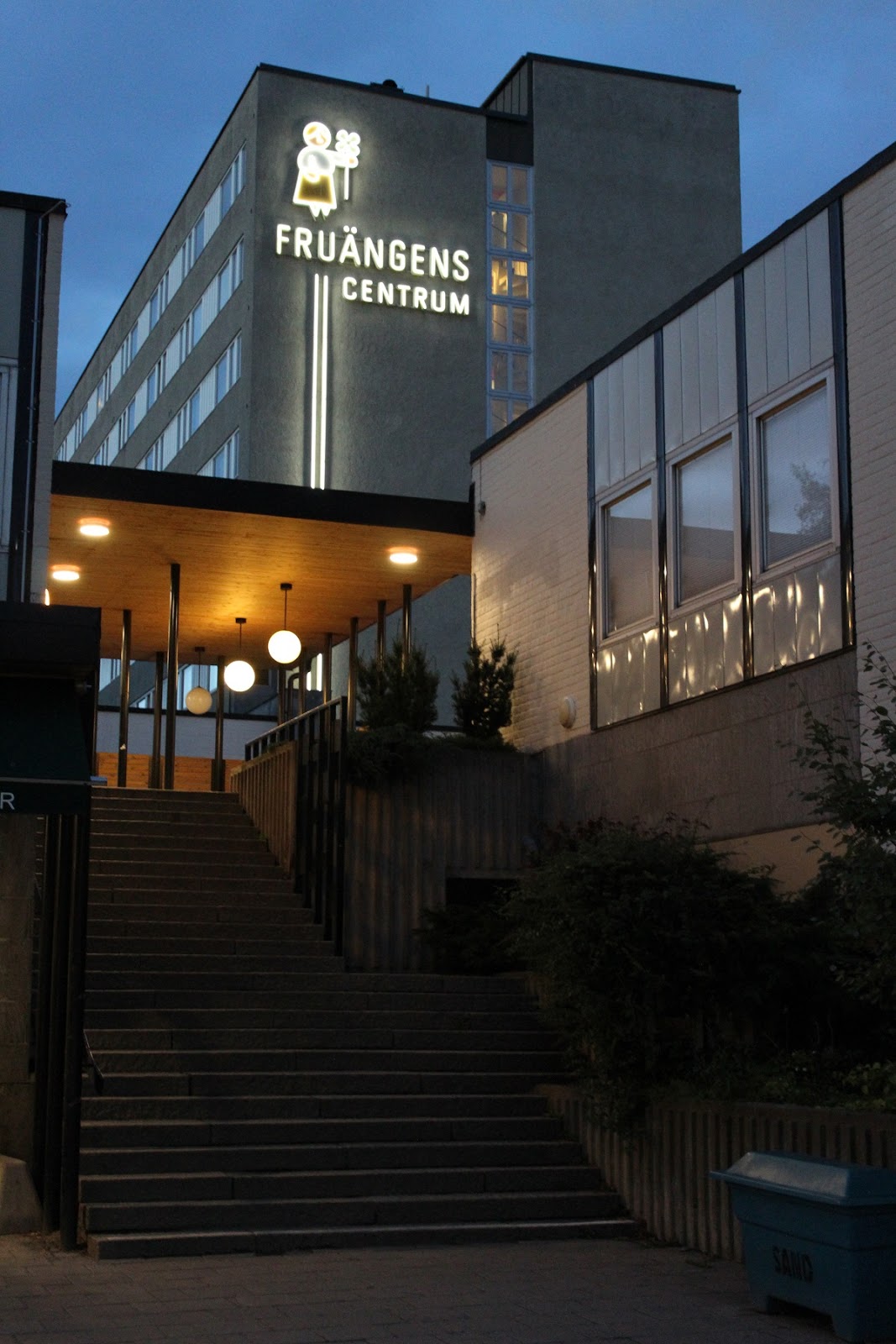
I am writing my second book about Gunvor Ström, a woman who started to work as a private detective in her mid-sixties. She lives in the suburb of Fruängen, in the outskirts of Stockholm. She engages two young friends that have always seen themselves as losers until they start working together. They are not always good at what they do but they struggle to develop and sometimes they really succeed.

My best news today is that my first book “Three Days in September” will soon be published in English. It’s a story about friendship, love and adventure but also manipulation, infidelity, violence and death. As it says in the text on the back of the book: After three days in September there is no way back.


Sum up life in Stockholm in three words.

Beautiful, contrasting, challenging.


Luna Miller is a pretty new part of me that has been living my passion for writing over the last few years. I published my first Luna Miller novel, Tre dagar i September, in Swedish, towards the end of 2015. A few weeks later I followed it with Den som ger sig in i leken (Playing with Fire) – the first book in my crime series, which has been translated into German as Wer sich auf das Spiel einlässt and Spanish as Quien juega con fuego.

Right now, I am working on my second book in the crime series, but at the same time, I am really excited about the imminent release of my first book in English. You will soon be able to find
Three days in September on Amazon and other major e-book distributors. 

https://lunamiller.com/en


Wednesday, 14 September 2016

60 Seconds with Eliza Green


By Gillian Hamer

Eliza Green tried her hand at fashion designing, massage, painting, and even ghost hunting, before finding her love of writing. After earning her degree in marketing, she went on to work in everything but marketing, but swears she uses it in everyday life, or so she tells her bank manager.

Born and raised in Dublin, Ireland, Eliza lives there with her sci-fi loving, evil genius boyfriend. When not working on her next amazing science fiction adventure, you can find her reading, indulging in new food at an amazing restaurant or simply singing along to something with a half decent beat.


Tell us a little about you and your writing.

I’m from Dublin, Ireland. I was working as a public servant up until March 2016. I finally quit my job after threatening to do it every year, to write full time. I began writing seven years ago after I got an urge to rewrite a book I was reading. I write character-centric science fiction thrillers.

What’s the best thing about being a writer?

Living inside a world you created and watching your characters grow up, make mistakes and take shape.

And the worst? 

Killing your darlings.


Why did you choose Sci-Fi as your genre?

Ever since I was a kid I’ve been obsessed with Sci-Fi TV and movies. When I think of new ideas the futuristic ones always pop into my head first. They’re the most fun and the most challenging.

Do you have a special writing place?

At home, at my lovely new desk that’s at least double the size of my previous one. My last desk was no bigger than a postage stamp!

Which four writers would you invite to a dinner party?

Charlaine Harris, Tahereh Mafi, A.G. Riddle, Gillian Flynn. I like variety!

If you could choose a different genre to write in for just one book – what would it be?

Hmm, contemporary women’s fiction. I wrote a book years ago in that genre that I never published.

If you could have written just one book by another author – which would it be?

Any of the Dexter books by Jeff Lindsey. How he managed to make us fall in love with a serial killer is beyond genius!

What are your future writing plans?

Publish book 4 in my Exilon 5 series, available in early 2017. Becoming Human, Altered Reality and Crimson Dawn make up the first three books. Echoes of Earth and New Origin are two new prequels I published in May 2016.

I’m also writing a young adult sci-fi series, starting with Feeder. It’s The Hunger Games meets The Maze Runner. Book 1 will be out in late November 2016.

Thanks, Eliza, for more information please see below and if you'd like to try Becoming Human for FREE follow the relevant link!
 

Website: www.elizagreenbooks.com


Wednesday, 7 September 2016

TLF - The Triskele Lit Fest!

Saturday 17 September sees the very first Triskele Lit Fest!
This is a litfest with a difference. We set out with five aims:
  • trade and indie authors together on the same platform
  • literary fiction on an equal footing with other genres
  • BAME authors talking about their books, not about diversity
  • speakers paid an appearance fee
  • admission free and accessible to all booklovers 

After a tremendous amount of hard work by Catriona Troth, TLF Administrator, plus the generosity of our sponsors, it's actually happening.


From 1pm-6pm, we have panels of authors to talk about their genre. Sci-fi and Fantasy, Romance, Historical Fiction, Crime and Thrillers, and Preserving the Unicorn.

In parallel, we have our trademark pop-up bookshop, where forty different writers will be available to interact with readers, sign books, talk about their work and make new friends.
 

And we've ticked every box.
  • A near 50:50 mix of trade and indie authors, not talking about routes to publication.
  • BAME authors like Radhika Swarup, Leye Adenle, Sareeta Domingo, Yen Ooi and Sunny Singh, talking about their books, not diversity.
  • Our literary panel – Preserving the Unicorn – brings together literary authors and their editors to discuss working on a manuscript that defies the 'rules' of storytelling.
  • And yes, we are paying our speakers and admission for readers is free.

Triskele Books is all about building bridges.
Words with JAM is a source of ideas and information for writers.
Bookmuse provides reviews and recommendations for readers.
The first Triskele LitFest offers something for everyone.

We know it’s far more important to build bridges than to erect barriers.
Seems people agree - here's an extract from our Tuesday #twitchat #bridgesnotbarriers