Thursday, 24 July 2014

The Rainbow’s End by Perry Iles

No two people ever see the same rainbow. For a rainbow to exist it needs three things—low sun, falling water and a surface to project itself against. That surface is your retina, retinas, retinae or whatever you call more than one of the wretched things. This is a good thing, because if we all saw the same rainbow, mathematicians would use trigonometry to triangulate on rainbows’ ends and the whole countryside would be full of little holes in the ground where they’d dug up the pots of gold. It would also mean that finding the ends of rainbows would become a competitive sport, and mathematicians would be fabulously well-to-do and they’d look rugged and handsome, and they’d all have blonde girlfriends with enormous breasts while poor Luis Suarez would be reduced to biting peasants in the favelas of Uruguay and he’d probably catch something unpleasant and die in terrible writhing agony.

We can but dream.

However, on a tree-falling-in-the-forest basis, it would mean that without people, there’d be no such thing as rainbows. I’m sure other animals would see them, but they wouldn’t know what they were. Little baby bunnies might say “Dad! Dad! The sky’s gone all stripey!” and Dad might reply “Don’t worry son, it’s a Technicolor sky-badger. Stay perfectly still and it’ll go away when the rain stops.” But they wouldn’t be rainbows. So in Glastonbury, if it rains (and I hope it doesn’t because nothing in this world smells worse than a wet hippie except perhaps a dead one) there will be 200,000 rainbows, and the rainbow that Pippin Galadriel Moonchild sees from the flap of the chakra realignment tent will be different from the rainbow James Hetfield off of Metallica sees (and will probably want to hunt down and kill) from the performers’ area.

The truth is like that. It’s made up of a billion tiny puffs of nothing that everyone sees differently. The truth shimmers; it’s ephemeral and mutable, subject to changes in time and attitude and culture. And we like our truth filtered. We aren’t interested in boring truths. There’s no genre in fiction called Happy Ever After, in which we get to find out what happened after Cinderella married the prince, or in which James Bond retires and goes to play golf on Sundays while his ageing wife cooks Sunday lunch for the relatives (“…but I don’t like broccoli, Auntie Pussy.”) Indeed, in our quest for sensation we’re willing to suspend belief entirely and accept the fact that James Bond is still the same age as he was in 1964. So it’s no great step from there to the realization that we like our truths adapted too. From being inquisitive, it’s a mere skip of logic to wanting to be told what to think to spare us having to do it for ourselves.

There is no such thing as truth, there are just facts and their interpretation. Any good divorce lawyer will tell you this. As the future comes at us, gets filtered through the moving prism of now and becomes our immutable past, we just can’t leave it alone. We have to pick at it and pin it down and put it into categories. We then use those categories to make our future safe by helping us to predict what will happen. And who better to guide us than our press, and who better to control that press than our government, which knows instinctively how to manipulate the facts, how to present them, and equally importantly when to distract us from unpalatable truths by sticking some breasts or an article about Royal Babies Through the Ages under our noses. And this is where the possibility for true evil lies, as the press builds the categories we shore up our belief systems with. Not all newspapers are evil, but I might go so far as to say that the Daily Mail is. Staffed by Rita Skeeters (one of whom grew up and changed her name to Rebekah Brooks) and run by government puppets, it says what the smartie-crunching masses daren’t say out loud. The Daily Mail bears a huge amount of blame for the rise of extreme right-wing politics, gung-ho nationalism and unthinking knee-jerk reactions to anything from immigrants and gypsies to benefit fraud and socialism. And then it pretends it’s harmless by showing us a picture of the Duchess of Cambridge and little baby what’s-his-name (forgive me for not knowing what he’s called; it’s because I don’t give a shit) in her lovely new home. The Daily Mail is a seething morass of bubbling evil disguised as a newspaper. But like pollution, climate change and Louis Walsh, it’s there, so much a part of our world that we think we’re immune from its insidious, creeping fascism, its subtle alteration of our senses and beliefs, telling us how bad the world is while the death toll steadily rises as people lose entitlement to their livelihoods. The Daily Mail trumpets “2000 IMMIGRANTS A WEEK ENTER BRITAIN!” and David Cameron follows it up by giving us all a serious look and saying “we really must tighten immigration control.” The Daily Mail bellows “THE HOUSE THAT BENEFITS BUILT!” and Iain Duncan-Smith puts on his reasonable voice and tells us that benefit fraud is costing the UK taxpayer £1.4 billion a year (about one hundredth of the amount companies like Starbucks and Amazon are avoiding paying through company tax loopholes, incidentally). And as a result of those policies, people begin to die, a bit like they began to die in Germany in the 1930s.

And when challenged, the Daily Mail will throw up its hands and whine about the freedom of the press. The press is resting on its laurels; it’s in the nation’s good books after outing lots of famous people for actually not being very nice. Take Jimmy Savile. Lovely bloke; raised millions for charity, helped make the dreams of hundreds of children come true via his television programme. Did huge amounts of work for people with disabilities, appeared tireless and unstoppable. Look, here he is in an old Jim’ll Fix It from the BBC archives, helping a little girl to realise her dream of meeting her idol, Gary Glitter. Savile closes the programme by moving out into the pre-pubescent audience with Glitter and they wave goodbye as they each cuddle a child. And they live happily ever after, doing their charity work and touring with endless 70s revival novelty shows respectively.

Except it didn’t happen like that. And we’re really glad. Why? Because the press told us they were bad people. The press did the children of this nation a great favour by exposing all those supposedly harmless entertainers as paedophiles. Rolf Harris won’t be singing Two Little Boys at Glastonbury this year in front of a crowd of ironic trustafarians. Poor Rolf—he touched me in so many different ways. Can you tell what it is yet? We can now, and we can sleep much easier in our beds knowing our children are comparatively safe from Jake the Peg’s middle leg, because all the nation’s kiddy-fiddlers are either doing time or bowed under the weight of their own paranoia because of all the new and interesting ways in which they can be found out—through text and email interception, computer download monitoring and phone hacking. But the press didn’t bring that situation about for the greater good. They did it for one reason and one reason only. To sell papers and make money. We love a good scandal, whether it’s two whores making a Wayne Rooney sandwich or Princess Diana being harassed to death in a Paris underpass. These are our freedoms—the vicarious schadenfreude we get from watching famous people suffer, the shiver of delicious fear that runs down our backs when we see the mighty fall. We love it, it’s what they’re there for. If you pay a footballer a quarter of a million pounds a week, or a singer a million pounds a gig, then we want them to bloody well suffer for it like we do when our alarms go off in the mornings and we shrug ourselves from the warm cocoons of our beds and slouch off into our bleak eat-shit-shag existences to earn our pittances. The press will be there on our behalf to hound the rich and famous every step of the way, hoping to catch a partner’s nipple or a flash of cellulite through a telephoto lens, hoping to find a sportsman stepping out of a bar at four in the morning, his judgment clouded by alcohol, in the company of a pretty girl suffering an apparent wardrobe malfunction. Tits sell papers. People like tits. As Keith Lemon once said to Kelly Brook, “You should be grateful, love; if blokes didn’t like tits you’d still be working behind t’counter at Dixon’s.”

And there will always be women out there happy enough to play to the crowd. The money’s good, you get free beer and drugs and a conveyor belt of B-list husbands. Katie Price is worth £52 million. That’s £26 million for each lump of frankly unattractive balloon-shaped silicon, because there aren’t any other reasons for her fame. She’s a glamour model. One definition of “glamour” is shape-shifting malevolence, another is enchantment and magic. Glamour models are certainly magic. They turn recycled wood pulp into money for Rupert Murdoch, they distract us from the business of the real world. School shooting? Famine in Sudan? Piece of unpopular legislation going through parliament? Never mind, here’s today’s Page Three stunna LaToya. She hopes to travel and meet people. She wants to go round the world, and with spheres like hers, she’s sure to be taking off before long, eh readers?

If the fourth estate has got us by the balls, how do we control it? Celebrities are no longer immune; they can no longer live in their gilded castles expecting to get away with anything while we ordinary folk look on. They need to be careful how to behave, because the press is tapping their phones hoping for a juicy bit of gossip. Celebrities are now accountable, like the rest of us. They don’t live up in the stratosphere any more. But the very fact of that accountability allows the government to use the press to dangle celebrities’ more outrageous escapades under our noses to distract us and channel our anger. When we should be righteously, supremely pissed off that our country is being run by a small group of millionaire politicians working hand-in-hand with global businessmen and a cartel of corrupt bankers who are actually beginning to kill off our weaker citizens, we are instead told to be annoyed at Jeremy Clarkson for muttering a nursery rhyme. Clarkson is an amiable enough buffoon who just happens to have the best job in the world bar none, but he’s a puppet, a tool of distraction, a readily available channel for our indignation so that we have none left for the true cunts of this world like Iain Duncan-Smith, who surfs the wave of indignation stirred up by the Daily Mail, and while we should be concerned that the death toll here in this green and pleasant land has risen by thousands in the wake of Duncan-Smith’s welfare “reforms” we are instead told to be concerned about a word Jeremy Clarkson either did or did not mutter on a TV out-take once. We’re going to hell in a handcart and Clarkson is dancing in the slaughterhouse like a big shaggy bear, wearing a “what, me?” look, shoulders shrugged, palms up, lower lip pouting, eyes raised heavenwards in clownish exasperation.

And how do we control the press without being censors? “I may not like what you say but I will defend to my death your right to say it”, as Elvis Presley once said. I suppose the national sense of outrage that greeted the fact that the News of the World was tapping the phone of a murdered schoolgirl for entertainment and profit was actually enough to get the paper closed down, but within a few weeks Murdoch launched the new, super soaraway Sun on Sunday. Same meat, different gravy. Let’s meet LaDestiny, she wants to cure global warming and help bring about world peace, and we’re certain a piece like her will succeed where others have failed, eh readers?

The redtops have spawned a kind of reverse samizdat—a government/press cartel of misinformation and pure bollocks distributed in the form of OK, Take a Break, Closer, Nuts, FHM and Loaded and a shedload of similar brain-dead prole-fodder. They know what we want, they now how to stop us thinking—they give us our daily fix of aspiration, then their puppetmasters offer us credit cards to buy it with. Then they crank up the aspiration a notch and offer us more credit cards. Carrot, stick… carrot, stick… and on and on. Their landfill of Kardashian trash buys our souls and ensures our obedience. It keeps us safe, allows us to sleep easy in our beds knowing that we can look around Kerry Katona’s lovely new home in the company of their written-for-infants editorials. Hug me till you drug me, honey, kiss me till I’m in a coma…

So how do we stop this? Not by scorning the methods of entrapment or eavesdropping or by imprisoning the hackers. Not by closing a whipping-boy of a paper when it steps too far. You don’t kill a weed by cutting its leaves off; you kill it by attacking the root. The only way to do this is to realise that the government and the press are exclusive entities which should be ring-fenced and not on any account be allowed to mix, on pain of criminal prosecution and political exile. The government doesn’t meddle so overtly with most forms of entertainment—fiction, the music industry, films, computer gaming or art, so why not apply the same rules to the press? They should exist in two separate spheres. In an ideal world, the press looks after truth, and the politicians look after freedom. There’s no really obvious reason why they should make such uneasy bedfellows, yet somehow they do. Possibly because truth and freedom are two basically indefinable concepts. But the press and the government have been in bed together for decades; they’ve been shagging each other senseless down all the days, and the bastard result is UKIP—politics that plays to the crowd via pre-arranged cracks in society the media have opened for them. It’s as if Victor Frankenstein strapped the Daily Mail to a wet metal table in a thunderstorm and a bolt of lightening created Nigel Farage. He lives! He lives!

This should be lesson enough. Keep the press apart from politics. Build a great big fuck-off fence between them, allow no cross-pollination. If you’ve had a career as Murdoch’s bitch, you should be prevented from going to work as Cameron’s spin doctor. And once you’ve kept the entities separate for a while, the press would then be welcome to criticize or praise the government on an independent level. And the first obvious result is that it would no longer be in the interest of the government to manipulate opinion or distract attention via the media. Any attempt by the government to influence the press or vice versa should be considered a criminal activity. In that way, the freedom of the press is not compromised—they can talk about what they want if it sells papers, and of course they can be prosecuted for personal intrusion without being able to stand on some kind of spurious moral high ground and fall back on freedom-of-speech platitudes. Laws could then be passed. Thou shalt not intrude into the lives of celebrities—particularly via their partners, children, neighbours or old friends, by monitoring their communication devices, or by hiring the sort of woman who could trip a footballer up and then make sure she was underneath him by the time he hit the floor. Prosecution for breaking those laws would then be a simple matter of criminality, with no political or censorious overtones. It would eventually become a matter of puzzlement when the Daily Bell-end moans on about immigrants or benefits, because this is not news, it’s not their job. It’s just bollocks, it reflects nothing about the world apart from the opinions of some very blinkered humans and tells us nothing. And above all and beyond everything, this kind of shit is not part of the mass media’s job description.

And then maybe we’ll have a slightly better chance of living just a little more happily ever after.

The Beach Where He Found It, a short story by Anne Goodwin

It was autumn when my daughter died.  Yellowed leaves had shrouded her crumpled corpse by the time they found her in the grass verge between the pavement and the park.  According to the coroner, it was the sludge of fallen leaves that had killed her, made her slip and bang her head in the panic of the attack; mugged for fifty quid and her mobile phone.

Some thought I was brave, some thought I was cold, the way I kept going, but I was neither. Forty-nine and no longer a mother, I clung on to the old routines by the tips of my lacquered nails.  I knew how to set the alarm and totter in heels to the bus stop.  I knew how to operate a till. I’d already learnt to cook for one but I’d never adapt to a world without my daughter in it.

A family of two since her father abandoned us when she was a toddler, it had been a wrench when she’d moved out.  But I was glad to step back and let her navigate her own life.  I lapped up the airbrushed anecdotes she fed me over kitchen-table chats in our dressing gowns at Christmas and birthdays.  After her death the changing seasons had no meaning: even on the brightest day, grey clouds hovered between me and the sun.

When I heard the message on the answerphone, I thought I was going mad.  It was a Thursday, the one night I worked late. I was tired, more tired than usual, although not tired enough to hallucinate.  I played it through a dozen times and then I sat on the sofa, still in my coat, still in my heels, staring at nothing.

The voice was a stranger’s but the words were hers.  My mind panned through the possibilities, homing in on the glimmers of hope amongst the dread. Her death had been an elaborate charade so she could disappear.  She’d witnessed a crime and the police had given her a new identity.  She was on the run with a man with a dubious past.  Her long-lost father had claimed her; she’d been kidnapped and I had twenty-four hours to raise the ransom.  Anything would do, so long as it meant it hadn’t been my daughter’s body beneath that blanket of autumn leaves.

I listened again.  The voice was jaunty: “I found your postcard. Let me know if you want it back.”  Then, as if reading from a script, my daughter’s words.

A caravan perched above chalky cliffs, a picnic among the dunes.  Still young enough to shape the sand into fairy-tale castles, yet old enough to battle the camping-gas stove to bring me morning tea in bed.  An imaginative child, romantic, she fancied she saw porpoises cresting the waves.

It was Miranda’s idea to rinse out a fat-necked smoothie bottle and post her message out to sea.  She swapped her pocket money at the on-site shop for a selection of picture postcards and a biro with multi-coloured inks.  She spent an entire rainy afternoon figuring what to write.

“It can’t be too complicated,” she said.  “A Chinese lady might find it.”

I doubted it would make it as far as the next bay, but I couldn’t shatter her illusions.  “If you give them our address they can write and let you know where it’s got to.”

“I know, I’ll put our phone number,” she said.  “That should be easier for a Chinese lady to read.”

Perhaps it was out of apathy that I’d kept the landline.  Perhaps I was also a dreamer, waiting for the Chinese woman to resurrect my child.  The voice on my answerphone was male, however, and Scottish rather than Oriental, but it was definitely quoting Miranda’s words.

If this card should chance to roam

Please be kind and help it home.

He’d sent it on the first stage of its journey. Now it was up to me to do the rest.  I shed my coat, slipped off my shoes and picked up the phone.


It was a while before I was well enough to travel up to Scotland.  Ian had offered to put the bottle in the post, but the risk of losing her again was too terrible to contemplate.  Besides, I needed to stand on the beach where he’d found it.  I owed it to the memory of that holiday, to the girl who’d lent her optimism to the sea.

I’d put on weight in those weeks I was on sick leave, languishing on the sofa, stuffing my face with chocolate and not quite watching terrible TV.  I slept through the alarm, or forgot to set it.  I didn’t have the energy to varnish my nails.  I was pleased my daughter’s message had reached dry land, yet it was as if they’d discovered her leaf-strewn body all over again.  

Ian sounded amused when I first rang him, but he couldn’t apologise enough when I explained.  Even in his consternation his voice was soothing, the type of accent you’d want on the end of a helpline, radiating empathy and warmth.

I must have looked a fright in my frumpy cagoule and flatties when he met me at the station, but Ian was too much of a gentleman to let it show.  He drove me to the beach, handed me the bottle, pointed out the cafe in the distance where he would wait.  He told me to take as long as I required.

I’d imagined tramping miles along the shoreline, collecting shells and bits of jetsam to build a shrine.  I’d imagined sobbing, collapsing, scrubbing sand through my hair.  Instead I pulled up my hood against the wind and hunkered down on the rocks.  As a crab scuttled away into a recess, I pictured Miranda with her fishing net in pursuit.  Yet, had she lived, she’d be beyond that now.

I unscrewed the lid and pulled out the postcard.  I let it rest in my palms like a prayer book, as I stared out to sea.  A trawler pricked the horizon and, in the middle distance, seagulls swarmed.  I tried to conjure porpoises as I waited for nostalgia to grab me, to swallow me up and deposit me among the waves. 

I stared until the sea had merged with the sky, but my soul was unmoved. I turned my attention to the picture postcard. We’d spent hours selecting the best of the bunch, yet the ranks of beached sun loungers failed to tally with my memories of that holiday.  It could’ve been anywhere.

I flipped over the card.  The purple ink was faded along the fold and the neat round letters could have been formed by any earnest child.  Even the words, although carefully chosen, were unoriginal.  Hardly the essence of her. 

I stuffed both card and bottle in my pocket.  I’d come all this way to be reunited with my daughter but she’d already left.

I was hankering after that coffee but I couldn’t turn up at the cafe so soon.  I rose and, slip-sliding across the seaweed-strewn rocks, headed for the bank of marram where a zigzag path let me meander through my thoughts.  It was daft to concern myself with what Ian thought of me, but I was loath to give him the impression I didn’t care.  Yet what would he be judging?  There’s no right way to grieve.

I remembered a quarrel the Christmas after she’d left home.  Apart from the terrible twos and teenage door-slamming, it was the only argument we ever had.  She berated me for not finding myself a boyfriend after her father had upped sticks.  I was flabbergasted: I’d no pretensions to be the perfect mother but I’d never expected criticism for putting her needs before mine.

“Don’t you see,” she snapped, “what a burden that puts on me?”

I was too old for romance now, too set in my ways.  Ian seemed stuck in a similar groove.  I’d expected someone older when he mentioned on the phone he was a widower.  Someone with wispier hair.

I cast a final glance towards the ocean.  The view had scarcely changed: the lonely trawler and the squabbling seabirds.  I turned to face the land.  Across open pasture, I could make out a low-rise building with a couple of rustic benches under an awning to the side.  I needed that coffee and Ian could think what he liked.

I trudged through the rough grassland.  Here and there, among the spikes of coarse grass, I caught a glimpse of pink. Some child, I thought, leaving a trail of sweet wrappers; her mother should have checked her. I looked again: those ruby spots weren’t litter but tiny clumps of delicate flowers fighting their way through the green. 

As I neared the cafe the flowers thickened to a rosy carpet. Butterflies danced in and out and, up above, a curlew called.

I lowered my hood, let the pale sun stroke my hair. What was the name of that flower? I wondered. Was it thrift? Perhaps Ian would know.

I quickened my pace. Spring had crept up on me without my knowledge or permission.  Yet, now it had come knocking, how could I refuse to let it in?


Anne Goodwin writes fiction, short and long, from flash to novels, and a blog that hovers somewhat closer to reality. She loves fiction for the freedom to contradict and continually reinvent herself. The portal to her writing world is through her website http://annegoodwin.weebly.com/. She also tweets at @Annecdotist.

Sightlines: A Conversation With the Natural World, by Kathleen Jamie

Reviewed by Rebecca Johnson

Kathleen Jamie’s essay collection begins with a vast silence, a freedom from all human and animal interference, among the ice cliffs of Greenland. “A mineral silence that presses powerfully on our bodies”, as she describes it. This silence forces you as a reader to focus. It draws you into the place and her description of it, into your own mind and senses, so that you become aware of yourself as a living body, and into the book itself through her quiet style of delicate attentive listening and precise observation. It creates an intensity that she sustains throughout, as this is a book about listening and looking, sensing and perceiving at an almost hypnotic level. It is a task that Jamie seems to suggest is the essence of being alive, as it is for other living creatures: being in our animal senses, experiencing and responding to the natural world. The visceral and emotional awareness of bodies in landscape.

In essays ranging across her native Scotland and its islands, to Shetland, the Orkneys and the Hebrides, and further afield to a Norwegian whale museum and beyond, Kathleen Jamie explores myth, history, scientific understanding, and cultural responses to the natural world as well as her own sensory experiences. She sees it as a ‘conversation’, a dialogue of co-existence in which she learns about her humanity – not always a happy lesson, sometimes a brutal, shameful or humbling one – and the ways in which people respond to and explore the non-human and the reasons why they do so, as well as trying to understand the lives of the creatures she encounters. She dismisses sentimental approaches to nature:  It’s ‘not all primroses and otters’, she points out, while examining cancerous tissue with a hospital pathologist; she does not shy away from death as part of life.

 As you would expect of prose writing from a poet, beautiful descriptions spangle her sentences. Writing of icebergs: ‘They are a blue you could fall into, as you could have fallen forever into the silence of the morning.’ Or of a gannet colony: ‘Here they were in the air, gannet, gannet, repeated like a stammer, the whole idea of gannet amplified and displayed.’ Or when she moves into the sublime, experiencing the evanescence and transience of animate life in remote places: ‘I had the sensation I always have on Atlantic islands, in summertime, when the clouds pass quickly and light glints on the sea – a sense that the world is bringing itself into being moment by moment. Arising and passing away in the same breath.’

This lyrical appreciation of the natural world contains within it a subtle anger, a witnessing of loss, which is also an awareness of time and the changes that have been wrought on bird populations, animal and human communities. Yet here she doesn’t carry through the implications of her observations to engage with political concerns: she does not indulge in polemics. She is forever the observer, never involved or passing judgement. Again, this may be a reflection of poetic technique, but I found it frustrating in essay form that she did not pursue the potential of the ideas latent in her descriptions, instead backing off into ambiguity, even contradiction, or leaving underlying implications to hang. Only in her last lengthy essay on whaling does she allow her views and emotions more scope.

Kathleen Jamie’s fascination with, love for and awe of whales ripples throughout the book. She describes the exhilaration of sighting killer whales off Rona; she cleans and admires whale skeletons in the Hvalsalen in a Bergen museum, imagining herself into their seaborne bodies; and, in ‘Voyager, Chief’ she visits whale jaw and vertebral relics dotted around the Scottish landscape to tell the story of the now extinct whaling industry – a history of which I was completely unaware. These remaining artefacts have something akin to religious meaning for her and she sees them as a form of atonement for the shame of the wholesale slaughter of these awe-inspiring and magnificent creatures for whale oil and flesh.

This is a lovely book, full of gentle joy and anger and an almost spiritual wonder for and affinity with the natural world. It is written in crystalline language that enhances perception, and explores the essence, ultimately, of our human existence in relation to the rest of the natural world.

In Fear of the Void, a short story by Tom Kilcourse

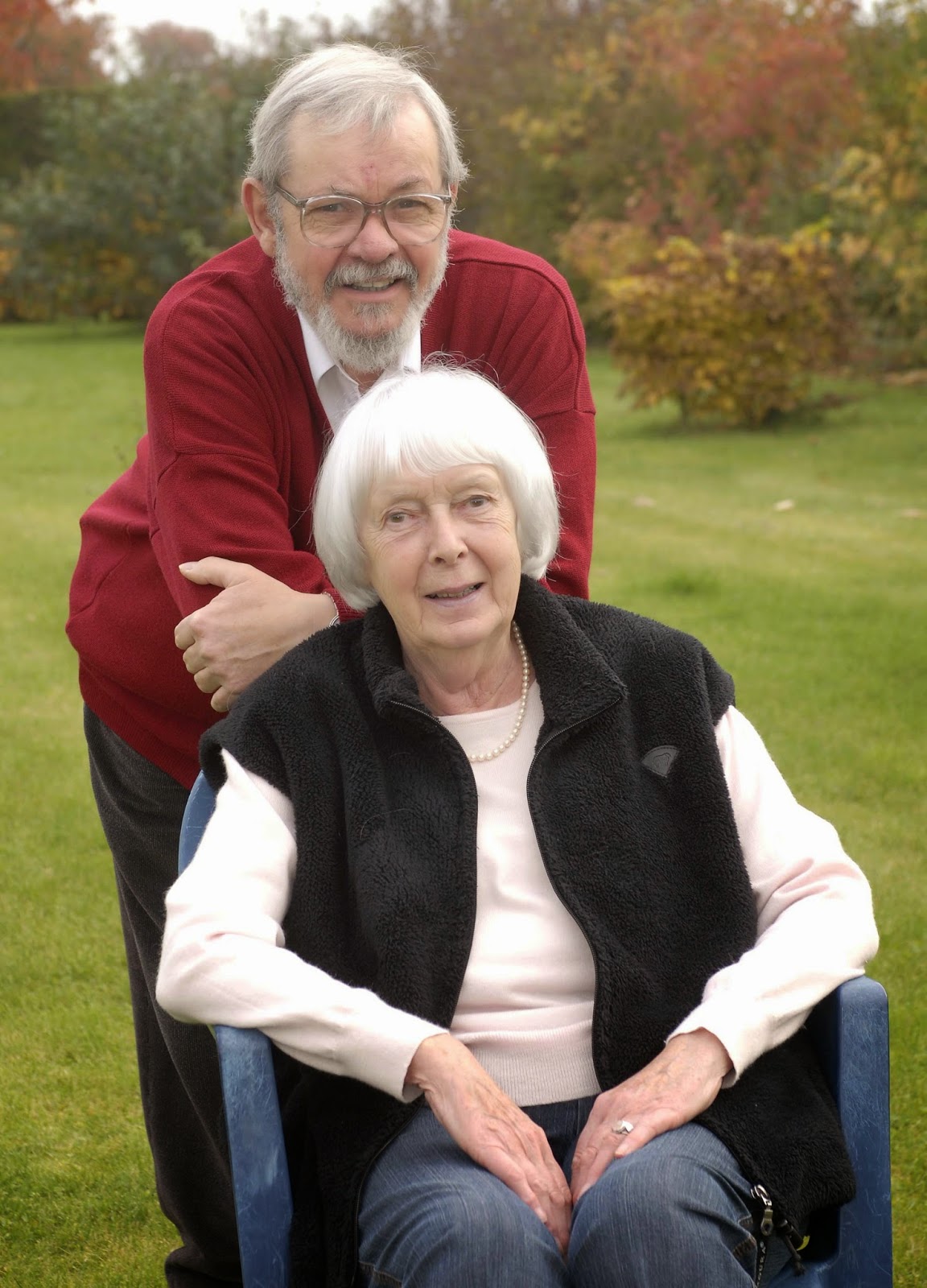
The following is a biographical piece originally written on Tom's Facebook timeline ...

In the darkness I listen to the laboured breathing and am touched by dread of life becoming a void. For half a century we have melded, each surrendering self to an emerging wholeness, so that the loss of one is not simply a separation of individuals, but the destruction of an entity. Such is the price of unreserved union.

We have journeyed far together since meeting in 1964, a meeting so unlikely that for it to have occurred suggests the existence of a guiding hand. She arrived in Oxford from her job with UNESCO in Paris, while I had travelled only from Stockport, where I drove a bus for a living. The distance between us was not merely geographical. If we are all the product of our experience, then we appeared to be of different species.

Raised within a family in the London region, she left England in her late teens and settled in France, first as an au pair in Normandy, and later as an office worker in Paris. Thereafter she held several positions with international organisations, working in Vienna as well as Paris. Her circle of friends included highly educated people coming from various nations. She was at ease in such company. She was 32 and single.

By way of contrast, I was at home in the company of manual workers, and with northerners in particular. My occupations had been in a Manchester back-street garage, underground in a coalmine and working on the buses of Stockport Corporation. My circle did not include a single university graduate and I had never been abroad. My childhood had not been spent in the bosom of a conventional family, but under the care of Victorian grandparents who had rescued me as an infant from the gutters of Harpurhey in East Manchester. I entered Oxford aged 27 and married, with children.

Our friendship began within days of the first term opening when I helped her with a minor academic problem. I fell into the habit of having coffee with her in her room, sometimes with another student, but sometimes alone. The conversation occasionally centred on our studies, she was reading economic theory in the first term while I read politics. More often though, we exchanged information about our experience of life: from vastly different perspectives.

Throughout that first year our friendship was entirely platonic. She appeared to me to epitomise self-assuredness and what I took to be sophistication. After the first term I visited my home in Stockport on most weekends, being given a lift by a fellow student also from the Stockport area. Vacations were spent at home too, driving a bus. During those working vacations my mates on the Corporation were keen to hear about Ruskin College and Oxford. Their curiosity contrasted sharply with my wife’s complete lack of interest.

As the year progressed I slowly became aware of a growing urge to get back to Oxford at the earliest opportunity. In the summer vacation I actually returned to College a week before the second year began. To my astonishment and indescribable pleasure Rita was the first person I met. I had believed her to be in Paris. We went together to a little teashop to exchange anecdotes of the vacation.

Subliminally, I had during the preceding year been drawn into a world that was new to me, a world of ideas in which my views were discussed, if not shared. I had drifted away from my life in Stockport with its entirely parochial focus. Friendships had developed with a number of people from different backgrounds but with a common love of exploring and sharing ideas.

Of those friends, Rita had become the one with whom I most enjoyed discussion. It had not occurred to me that she would countenance a deeper relationship, but a few days before we were due to leave for the winter vacation in 1965 she came to my room and spoke of her feelings towards me. To say that I was surprised would be an enormous understatement. We became lovers on the very last night of term.

During the remaining two terms our relationship deepened, yet it probably would not have endured beyond our spell at Ruskin College had the ‘guiding hand’ not again intervened. In the final term I was offered a job in London with the Transport & General Workers’ Union, who had funded my studies. However, when I was awarded a State Mature Scholarship, I chose to go to Hull University rather than work in London. By pure chance, Rita was also accepted by Hull.

I divorced while at Hull, and a year after graduating we married in Manchester where we found jobs and set up home together. In the following decades we moved several times, usually because of my career, with an uncomplaining wife always prepared to change her own job. Notwithstanding the occasional verbal punch-up, we remained devoted to each other.

Now, she is 82 years old, while I am 77. Whereas I could once recognise the clickety-click of her heels as she approached, the brisk step has been replaced by a shuffle, aided by a stick. Her back is bent because of osteoporosis and she is in constant pain since suffering spinal fractures last year. Where once I would reach across the bed to arouse her, I now do so to ensure she is alive. I do it reflexively should I waken in the night and do not hear her breathing.

I have never been a churchgoer or follower of a particular faith, but I do pray to some unidentified god. I give prayers of thanks for the wonderful life I have had and the love I have known. I also express my gratitude that the ravages of ageing have been entirely physical, with her intellect being as sharp as ever. I give thanks too for being fit enough to continue caring for her. The only thing I ask for in those prayers is for it all to last just a little longer.


Mancunian Tom Kilcourse is an ex-miner, ex-bus driver, ex-Ruskin College & Hull University student, ex-management guru, and at 77 nearly expired. He writes for fun because he can’t make it pay. He has self-published two short-story collections, a brief autobiography, and three novels with a fourth in preparation. He retired to France in 1998 and returned with his wife last year to live in Cheshire.

Wielding the Double-Edged Sword: The Novelist as Activist by Sarah Bower

The writing (and reading) of a novel can take us on unexpected journeys. The research which goes into any novel is in more ways than one like an iceberg. All good writers know that their research must scarcely show in their fiction. There’s nothing worse, as a reader, than finding yourself dragged unceremoniously out of the fictional universe by a passage of ‘info dumping’ that reminds you the world which has so engaged your real emotions is a mere fabrication, flimsy and evanescent. What we writers also know in our bones, but generally try to forget between novels because it might stop us ever starting again, is that the research we think we shall need for any new project always turns out to be a fraction of what we actually end up doing. However meticulously we plan a novel in advance, the work in progress has an organic property and tends to grow in unexpected directions, to lead us down paths we neither anticipated nor even suspected the existence of.

The novel I am currently writing began with a baker in Yorkshire. By some process which I’m not even going to begin to try to explain, a Palestinian refugee, a fisherman, has since entered the story. I am not uninformed about Palestine. In fact, I would describe myself as engaged both historically and morally with the vexed question of who is entitled to what in that much-abused part of the Middle East. But the creation of fiction demands far more of us than reading history books and keeping up to date with the news. For me, the most important aspect of research is that which relates to place. I never really grasp my characters or their stories until I know where they are. Maps and photographs are useful, of course, but they give you no sense of how a place feels or smells, no real concept of the quality of its light or the sounds that characterise the hours of its days or the taste of its food. I remember when I was writing The Book of Love (aka Sins of the House of Borgia), even though the facts of Cesare and Lucrezia Borgia’s lives were possibly more familiar to me than the facts of my own at that point, I couldn’t bring the story together until I had spent some time in Ferrara, where most of the novel takes place, walking around its streets, eating pumpkin ravioli, listening to the way people speak, seeing how the buildings and spaces relate to one another in a concrete, physical way, how shadows are cast and light plays. Only once I had done this did any of what I was trying to achieve make sense.

So, Palestine. My character comes from Gaza. How on earth does one visit Gaza, even in quieter times than those which prevail as I write this? I’m not by nature any kind of activist. I write novels. My engagement with the real world is tangential at best. I’m not afraid of physical danger (as those who followed my circus escapade will know) but have a profound aversion to public displays of my own opinions, in however worthy a cause. I don’t get involved, and if you don’t get involved – even if you do, in fact – it’s virtually impossible to get into Gaza. As for getting out again, well, that’s a whole other story. It is almost impossible to avoid casting oneself in the role of bull in china shop if one attempts a visit to Gaza.

Having concluded, reluctantly but inevitably, that visiting Palestine at all seemed impossible, I began a programme of reading and hoped my imagination would do the rest. Then I met a woman I shall call Caroline. Caroline is a Quaker, and for the past fifteen years, this quiet, elegant woman of a certain age has been going to Palestine every autumn to help farmers near Nablus with their olive harvest. The work done by her group and others is necessary because the farms where they work are on land which is under Israeli control. The Israelis only grant the farmers permits for a few days each year to harvest their olives, so they need as many hands as they can muster to complete the work within the permitted period. If they fail to complete the harvest for three years in a row, the Israelis accuse them of neglecting their land and can requisition it. The presence of Caroline’s group and others like it is also necessary in order to witness and record instances of obstruction of farmers going to their fields and clashes between the Palestinians and settlers from nearby Israeli settlements; while there can be aggression on both sides, it tends to be the Palestinians who get arrested and thrown into what is known as administrative detention, or imprisonment without trial. It tends to be the Israelis who carry guns and the Palestinians slingshots.

I asked Caroline if she thought her group would allow me to accompany them on their next trip, even though I’m not an activist, just a novelist undertaking research. I would, she said, have to have an interview and attend a weekend of training, and, if I passed muster, they would be happy to let me join them. As I write this, I have just returned from the training weekend. In deepest Bloomsbury I learnt how to lie to the immigration authorities at Ben Gurion Airport and what gifts to take when invited to dinner in a Palestinian household. I learned that the bus from Jerusalem to Nablus leaves by the Damascus Gate and that the best antidote to tear gas is to hold a cut onion over your mouth and nose. Most of all I learned what some modest and very brave people will do to protect the freedoms of those who have insufficient resources to protect themselves, and felt somewhat ashamed of myself.

Can the novelist be only a novelist? If her engagement with the world is, as I have suggested, a bit semi-detached, can she write with the passion necessary to fire up her readers? Perhaps this depends on how good a writer she is. If she can manipulate words with sufficient skill, she can surely make readers believe in her commitment to a cause through creating characters who live and breathe with all the depth and complexity of real people. Novelists are, when all’s said and done, liars and good novelists are more accomplished liars than bad ones. Regimes which fear their people certainly take novelists seriously. They lock them up or send them into exile. Sometimes they execute them, as happened to the Nigerian writer and environmental activist, Ken Saro-Wiwa. Norwich, where I live, is part of the international network of Cities of Refuge, and offers sanctuary to writers in exile, most recently China’s Jiao Guobiao. Vassily Grossman’s wonderful novel, Life and Fate, was seen by the Soviet authorities as such a threat they even confiscated the typewriter ribbon which carried impressions of the writer’s words.

Is fictional truth, then, as powerful as ‘actual’ truth? I think it can be.  Readers tend to engage with fiction far more strongly than with factual writing, and characters and their stories lodge in their minds with greater solidity and permanence. Charlotte Bronte was not merely a story teller but a social campaigner, and how much more effectively does her portrayal of Jane Eyre’s schooldays lodge in the mind than some dry factual report on conditions in girls’ boarding schools in the first half of the nineteenth century. Likewise Anna Sewell, who wrote Black Beauty not to reduce generations of little girls to delicious tears but to draw attention to the mistreatment of working horses. If she had merely sat on committees or written letters to the newspapers, her campaign would have merged with other similar campaigns years ago. What most of us know about working conditions for horses in the Victorian era is entirely due to her skill in fictionalising their lives in the characters of Beauty, Ginger et al.

As novelists, therefore, we have power, and with power comes responsibility. Yet what is that responsibility? It would be easy to assert that any novelist whose fiction supported social or political positions opposed to our own is using her power irresponsibly. Indeed, we do demonise artists who ally themselves with the unacceptable. The American government interned Ezra Pound in an asylum because he supported Mussolini. That most English of English writers, P. G. Wodehouse, never felt able to return to England after his internment by the Nazis and a series of radio broadcasts from Germany that suggested he was a collaborator, even though his name was officially cleared after the war. Surely these writers paid the price of expressing their opinions just as much as others who are exiled, imprisoned or otherwise reviled for views which most of us find more acceptable.

Freedom is a double-edged sword, which the writer must wield with conviction, honesty and courage.

Sarah Bower’s most recent publication is a short story for the Hong Kong based magazine, Asian Cha. You can read it here http://www.asiancha.com/

Wednesday, 23 July 2014

Freedom by Anne Stormont

Freedom makes a huge requirement of every human being. With freedom comes responsibility. (Eleanor Roosevelt)

The fourth of July 2014 marked Independence Day for the USA and for me. On that day I retired slightly early from my 36 year career in primary school teaching. The full impact of my new freedom has still to sink in, but amongst other things I'm looking forward to having more quality time for my writing––freedom indeed.

By coincidence, the theme for this issue of Words with Jam is freedom and examining freedom in the context of writing is interesting, to say the least. I hope the following does this vast subject some justice.

Freedom is often hard won. Wars are fought to preserve or regain it. People lay down their lives for it. It's a very topical subject at the moment whether or not you're a writer. Nobody can be unaware of the centenary and commemorations for World War One and of the many young soldiers who believed that their country's freedom was at stake if they didn't fight. Equally the present day conflicts in Syria, Egypt and Israel-Palestine (to name but a few) are all about freedom. The stakes are indeed high. *Soldiers, activists, academics, hostages, political prisoners and politicians have often been moved to write about their experiences; experiences gained in their personal struggles for freedom. Political conflict and war have also prompted countless novels––from Tolstoy's War and Peace to Michael Morpurgo's Warhorse––and many volumes of poetry.

But in other not so high stakes arenas of the written word, how does freedom pertain to writers and writing more generally?

Where does the freedom to write come from? Obviously an author needs the freedom of  time and space to write.  But writers must also have the benefit of freedom of speech, in order to write what they really want to say. Then of course, if a writer wants readers, there has to be freedom to publish––something the internet and the growth of the 'indie' publishing movement has made much more possible and democratic; agents and publishers no longer have the gate-keeping power they once had over what gets into print.

Indeed, writers' freedom is encompassed within the United Nations Declaration on Human  Rights. According to Article 19: Everyone has the right to freedom of opinion and expression; this right includes freedom to hold opinions without interference and to seek, receive and impart information and ideas through any media and regardless of frontiers. And further in part 2 of Article 27: Everyone has the right to the protection of the moral and material interests resulting from any scientific, literary or artistic production of which he is the author.

For me, the freedom to be an independent author-publisher, to work within a community of fellow writers and to serve a community of readers is a cherished privilege. Indeed this has been a life-changing kind of freedom for me.

But of course with freedom comes responsibility. Writers must respect the rights and freedoms of others. For example, readers have the right not to be endangered or corrupted by the written word and they must have the freedom to be critical and to disagree.

Writers who write for a community of readers have several specific duties. Duties that apply whether the written work is an academic thesis, a research report, a memoir, a work of literary or commercial fiction of whatever genre, or a poem. There's the duty to produce work of the highest standard possible. There's the duty to educate or to entertain or to provoke thought and discussion. A writer must recognise that while a community of readers and/or fellow writers permits and facilitates that writer's free and full development and communication of their art, there is also a responsibility on the writer to respect the general welfare of that community.

Yes, the writer should always be free to push boundaries, to experiment and to challenge the status quo, but this must always be done in good faith, in a relationship of trust between reader and writer and yes, with respect.

As an author-publisher myself, I particularly love this quote 'Liberty is the possibility of doubting, of making a mistake,... of searching and experimenting,... of saying No to any authority — literary, artistic, philosophical, religious, social, and even political'. Ignazio Silone, The God That Failed, 1950 speech, Detroit, 1952

Don't let anything stand in between you and your readers, but remember artistic freedom is precious. Support it and use it wisely.

* My Top Ten works of fiction and non-fiction on the subject of Freedom
All Quiet on the Western Front by Erich Maria Remarque
Freedom from Fear by Aung Sang Suu Kyi
The Long Walk to Freedom by Nelson Mandela
An Evil Cradling by Terry Waite
The Long Bridge by Ursula Muskus
Birdsong by Sebastian Faulks
Warhorse by Michael Morpurgo
The Idea of Israel: A History of Power and Knowledge by Ilan Pappe
The Occupation Diaries by Raja Shehadeh
Palestinian Walks: Forays into a Vanishing Landscape by Raja Shehadeh
(and the war poetry of Wilfred Owen and Siegfried Sassoon)

What would your top ten 'freedom works' be?


Anne Stormont is an author-publisher. She can be a subversive old bat but maintains a kind heart. As well as writing for this fine organ, she writes fiction for adults – mainly of the female-of-a-certain-age persuasion – and for children. She blogs at http://putitinwriting.me  – where you can find out lots more about her.

Monday, 30 June 2014

Another volume of prize-winning short stories from the Words with JAM BIGGER Short Story Competition 2013 is released ...

Judged by David Haviland (fiction agent for the Andrew Lownie Literary Agency), Polly Courtney (author of Feral Youth) and Susan Jane Gilman (author of The Ice Cream Queen of Orchard Street), this second collection displays the talents of another up-and-coming group of new writers.

A heady mixture of stories, from romance to spine-chilling tension and from the virtual world to the extreme worlds of the self-deluded, these stories will take you to places you’ve never been before.

Longer stories are mixed with pieces of flash fiction. How long is a story? As long as it takes to tell it. This second volume of competition-winning stories proves the maxim once again.

Stories and contributors include:
Advertisement by James Collett
Guests by Alison Wassell
A Lonesome Snow Leopard by David McGrath
The Clock by James Harding
Apprentice Pillar by Ralph Jackman
Recycled by Marie Gethins
Drop-Dead Gorgeous by Helen Laycock
The Road to Repair by Gail Jack
Street Kids Don't Have Birthdays by Gill Sainsbury
Sackcloth and Ashes by Justin N Davies
Beneath the Arches by Lindsay Bamfield
Biological by KM Elkes
Is There Anything You’d Like to Say to the Person Who Donated this Food Parcel? by James Collett
The Baron’s Elixir by Mahsuda Snaith
Let Me Pay by Bren Gosling
Symbiosis by Mark Wilkinson
99 Red Balloons by Barbara Leahy
Cockles by A.M. Hall
Mustard Heart by L.A. Craig
Tell Me a Secret by Alison Wassell
Your Account is in Arrears Take Action Now by Justin N Davies
A Pointed Question by Brindley Hallam Dennis
Trumpet Dreams by Hilary McGrath
Little Legs by Julia Anderson.

Paperbacks are available from Amazon. Ebooks are available from Amazon,KoboSmashwords and other retailers.