Showing posts with label authors. Show all posts

Thursday, 24 September 2015

Classics - And Why We Love Them!

By Gillian Hamer

Do you have your own favourite Classic? A book that moved you or signified a particular period – good or bad / happy or sad – in your life. Classic novels have played a big part in a lot of people’s life stories, and for authors a big part of their careers.
Here, a few fellow writers reveal their favourites and answer three questions:

1. Your favourite Classic – and why?

2. Your favourite quote from above novel.

3. How the book has influenced your writing.


AMANDA HODGKINSON
www.amandahodgkinson.com


1. Tess of the d'Urbervilles by Thomas Hardy. My favourite Hardy novel. I adore novels where the landscape is an important character and the landscapes of Tess are so central to the story - Tess is also a wonderful invention - an intense and heartbreaking character. I have pondered over her role as a woman for years and I expect I will continue to do so for many years to come!

2. “...our impulses are too strong for our judgement sometimes.”

3. I think what I find most satisfying about the book is the intensity of feelings the characters have. They really live and breathe in Hardy's pages. If I have taken any influence from this book it is both Hardy's love of the natural world and also a sense of trying to create in my own novels, the kind of intensity and truth that he evokes so well in his characters.

BARBARA SCOTT EMMETT
www.emmettweb.co.uk

1. My favourite (modern) classic is Kleinzeit by Russell Hoban.

2. "Summer, age something. Before a thunderstorm. Black sky. A piece of paper whirling in the air high over the street. Harmony took place.
I remember, said Kleinzeit."

3. It made me want to write about that moment when harmony happens, when we 'remember' (re-member. become unified), and that has been the motivating force for most of my novels - reaching the moment when everything just is.

LIZA PERRAT
www.lizaperrat.com

1. Gone With the Wind by Margaret Mitchell. The beautiful women, the handsome men, the glam period costumes and a fiery Civil War backdrop. The drama and romance!

2. “My dear, I don’t give a damn.”

3. Inspired a love of historical fiction, epic dramas based on fact, things I tend to write about in my own fiction.


GILLIAN HAMER
www.gillianhamer.com

1. Little Women by Louisa May Allcott

2. “Every few weeks she would shut herself up in her room, put on her scribbling suit, and 'fall into a vortex,' as she expressed it, writing away at her novel with all her heart and soul, for till that was finished she could find no peace.”

3. Remembering the excitement and anticipation of entering the world of Jo March and her sisters, and to realise at a young age I shared Jo’s passion for language and writing. It was a very exciting time for me.


CATRIONA TROTH
www.catrionatroth.com

1. War and Peace by Tolstoy.

2. “We can know only that we know nothing. And that is the highest degree of human wisdom.’ OR “Because of the self-confidence with which he had spoken, no one could tell whether what he said was very clever or very stupid.”

3. In 1972, the BBC undertook the massive task of dramatising Tolstoy’s War and Peace in a 19 part TV drama. I started watching it with my family and immediately fell in love with Pierre (and incidentally with Anthony Hopkins). About halfway through, I found I couldn’t wait any longer for the net episode. I borrowed a copy of the book from the school library and went on renewing it week after week until I finished reading the same week as the TV drama reached its final episode. I am not sure I could have tackled a book like that at such a young age (or even now) without the visual images from the series to help me distinguish the multiple characters with their complicated Russian names and keep track of the multi-layered plot. But I loved it, and it taught me never to be put off by the length or the daunting reputation of a book, but to have a go and enjoy it on its own terms.

I’m not sure I’d say the novel specifically influenced my writing, but devouring an early diet of classics a) made me ambitious to tackle big subjects in my writing and b) in a less positive way made my early writing hopelessly pretentious – something it took me a long time to get over!


JJ MARSH (JILL MARSH)
www.beatrice-stubbs.com

1. Infinite Jest by David Foster Wallace

2. “It takes great personal courage to let yourself appear weak.”

3. It affected my writing by making me want to give up. And by making me more truthful.


1.

Saturday, 31 May 2014

Five Ways To Succeed in the German Market

Sophie Schmidt
by Sophie Schmidt of epubli

As most authors know, it is not enough to be published in just one market. For example, Joanna Penn - New York Times and USA Today Bestselling author - just has published her first German translation of her book “Pentecost”. In our globalized world it has never been so easy to publish and distribute books and ebooks worldwide. One high potential market is Germany with its great affection for reading and its long book tradition. 5 key facts will explain what English speaking authors should expect and why the German market might be exactly the right one for them.

The German affection for Britain


One thing you should always keep in mind: Be as British as you can! Germans love the British attitude, settings and humor. So don’t try to become a German writer, just stay as you are.

This love for the English language goes beyond TV series and clothing from Top Shop. Many successful German writers take English-sounding author names, like Poppy J. Andersen and epubli author Mathilda Grace. Especially in the romance, history novel and fantasy sections, English author names are really attractive for the mostly female readers.

The British countryside as well as metropolitan cities like London are highly attractive for German readers. Especially love stories seem to be much more appealing to readers when they are set in the English environment.

Also the economic side is really interesting. After the UK Germany is the biggest market for sales of American books in print and even the third biggest market for sales of American ebooks. Books in the English language are frequently bought and read in Germany. 40 Million Germans speak English fluently. This is a market you shouldn’t ignore.

Germans value books

Germans are rightly proud of their literary heritage: Goethe, Schiller, Heine, Fontane and their colleagues set the bar high for new and upcoming authors. Some would say that German readers are mostly conservative. It is true that many people are still struggling with digital reading. But one could see it differently. Germans love books. The long reading tradition, the strong affection for good stories and the curiosity for new authors make Germany an interesting market for international authors. Especially British and American publishing houses see that.
This means also that Germans are used to a very high quality - not only in printing but also in the way how stories are told. You, as the author, should take care that your book meets these standards. Your translation has to be done professionally as well as the book design and printing. German readers will judge you harshly, if this is not done correctly. So get the help you need to shape your idea and prepare the book as well as you can. epubli offers a range of experts on the page tailor platform. On this platform, authors can find help for editing, design, translation, marketing and PR.

Amazon is not everything

Germany has embraced many of the developments already at stake in the USA and the UK, but there is one major difference: Amazon has to compete with other distribution platforms such as iBookstore, Kobo or Tolino. Tolino in particular is a strong alliance of the major German bookstores and accounts for over 37 % of ebooks and ereader sales in Germany. Also, it was just announced that independent bookstores are starting a digital alliance to improve their standing within digital book distribution. Every author should consider the variety of platforms Germany has, when choosing a distribution partner. It would not be enough to rely just on one platform.

eBooks and indies are up and coming

There are some significant differences between the UK and the German bookmarket. First, let’s have a look at ebook growth.

Compared to 2012, the overall market share for ebooks has doubled in the year leading up to 2013 (5%). At the same time, online book sales soared to 10.4 %, making up 16.5 %. Even if the German market is behind the US and the UK, it is growing fast. One good thing: there is less competition for you.

Also the Indie author scene is growing. The notion of hybrid-author is spreading in the country of Goethe and Schiller, and a cursory look at the Amazon.de ebook bestseller list reveals that 50 % to 80% of the top 10 ebooks are self-published titles.

One key thing you should know about the German book distribution in general: The German book market is regulated by “Buchpreisbindung”. This tongue twister translates as “fixed book price law”, which states that a book cannot be priced differently on different platforms. You couldn’t, for example, price your book at 99p on Amazon but £7.99 in the local book store (or vice versa). The fact that retailers cannot freely determine the price for books - and that pricing is not linked to consumer demand or production costs - is designed to support small local bookstores. Without Buchpreisbindung big online retailers would offer deep discounts on most books and local stores would lose customers. Of course publishers and authors can set the price for a title as high or low as they see fit.

Spread the word in Germany

Marketing in Germany is as complex as in every other country. There are some special platforms and societies you should know about. Even if many Germans speak English very well, it would be useful to do marketing in German. Maybe some of your friends or even your translator might be a good help?

Social Reading Communities
It’s not only Goodreads which plays an important role in Germany. lovelybooks.de is the perfect platform if you are writing literary fiction and they have just opened up for Indies as well. Use these communities to have some online readings, interviews and give aways. Also, there are some interesting platforms bringing authors and bloggers together. For example, vorablesen presents titles to bloggers, who review the book and give feedback on cover design and layout. You shouldn’t miss this great input.

Social Media
Even if the social media market in Germany is much smaller than in the UK, you should have an own facebook fanpage as well as a Twitter account. These are the major social media platforms in Germany. If you are an author of non-fiction books you should think about LinkedIn and the German pendant Xing. Beside these bigger platforms there are many special interest communities organized online. You should do your research here to get really close to your target group.

PR
The German press is often conservative and not open to Indie authors. Especially the national newspapers and magazines are still into traditional publishing. But there are a lot of online magazines and blogs you should contact. Often, they are much more open.

Newsletter
A German Newsletter will help you to connect with your German readers. Use it to give them some special information and maybe invite them even to a reading in the UK? As it might not be easy for German readers to meet you in real life, you should give them some insights in your readings and your work to build up a long lasting relationship.

Events
We see it might not be easy to travel several times a year to Germany. But maybe you could use the bigger fairs in Frankfurt and Leipzig to meet your readers as well as making important contacts within the German literary scene.

In general, marketing in Germany is not too different than in the UK. Indie authors know that the work just starts when the book is finished. The overall goal of all your activities should be to build up a long distance relationship with your readers to create a strong fanbase.

Sophie Schmidt is Head of Author Relations and Marketing at German Self-Publishing platform epubli. The platform has supported the work of independent authors since 2008 and offers print as well as eBook publishing and distribution through all major retailers including Apple, Amazon, Google, Tolino, etc. More and more international authors identify Germany as a key markets for their books. Sophie and her team help authors get started in the very complex German bookmarket. Besides broad distribution worldwide, epubli really helps authors reach their readers. The workshop programme “epubli lab” was announced at this year’s Leipzig Bookfair. Amongst other topics, authors are trained in marketing, PR and online sales. 


With JJ Marshauthor, reader, Triskelite, journalist, Nuancer, reviewer and blogger
Likes: pugs, Werner Herzog and anchovies. Dislikes: meat, chocolate and first drafts.


Friday, 16 May 2014

Know Your Rights


Alex Hardy, Harbottle and Lewis
Alex Hardy, of law firm Harbottle and Lewis, ran a workshop at London Book Fair’s Author HQ on how best to exploit your Intellectual Property Rights.

An excellent session for a maximum of eight participants, she tailored the session to our specific questions and shared her experience of publishing law. After ascertaining that seven out of eight of us were authors, she began by outlining the key pitfalls for authors when negotiating rights contracts.

The Whole Farm
One of the authors asked about the term ‘rights grab’. Alex explained the term is used to describe a publishing contract in which an author assigns or licenses much more than just the book or ebook rights in their work. For example, an author may license or assign to a publisher the copyright and related rights in their work “in all media and formats now known or hereafter invented”. Authors should instead license those rights that the publisher is committing or expecting to use.

Ask yourself why a digital-only publisher need the rights to a paperback/cartoon/film version? At best, they might sub-license the rights to your work to another party but at worst the rights will remain unexploited. And if you’ve sold the rights for merchandising to a publisher and you are offered a film deal at a later stage and the film producer wants the merchandising rights, it will be very difficult to get those rights back.

Sheep and Goats
These negotiations are very commercial so get hard-headed. Think everything through first. Publishing contracts can be quite general; spell out exactly what you are selling and specify that anything else not mentioned is excluded – this is a reservation of rights clause. Check everything is on paper. Insist on getting precise definitions such as what ‘enhanced ebooks’ actually means.

Understand Time Terminology
‘Legal term of copyright’ means your lifetime plus 70 years. Always try for shorter licence period if appropriate and ensure you can get out of the contract (terminate) if something goes wrong. A termination of contract clause, with an acceptable notice period for both sides is essential.

Get Them Back
In such case as the publisher’s routes are no longer selling your work, you may want to get your rights back. You will likely need a reversion of rights clause in your contract: in an electronic era, the phrase ‘out of print’ may no longer be relevant. It may be better to negotiate a sales figure to trigger reversion of your rights: such as how many (or how few) copies are sold in a year.

And what happens if the publisher goes bust/gets taken over or merges? Have a clause covering those eventualities, aiming to put the control back in your hands.

See You In Court
One of the party enquired about libel. His book refers to real figures in a fictional context, so is the disclaimer at the beginning enough? Names, characters, businesses, places, events and incidents are either the products of the author’s imagination or used in a fictitious manner. Any resemblance to actual persons, living or dead, or actual events is purely coincidental. Disclaimers may make no difference whatsoever. If the person is recognisable (even if not named), a claim may still be brought against you for damage to their reputation.

Most large publishing companies have media liability insurance in the event of these kind of claims – check yours does. If you are a small publisher, consider consulting a broker. Some of Alex’s clients have used La Playa.

Accusations of plagiarism can arise, particularly in non-fiction or ‘How To’ books. They rarely reach court but it is vital to document and acknowledge your sources to show how you have created your material. The Society of Authors provides helpful advice on quoting copyrighted material, but there are grey areas. One area which is clear is claiming false association with another author’s work. Avoid that or face the consequences.

Options and exclusivity
If you are writing in various genres, be careful with granting your publisher an automatic option to your next work. Publishers may add an option clause to the contract, entitling them to buy or at least have the first option to negotiate for the next work in your canon. One idea is to reword this clause so it includes only the same kind of work, ie, the next in the series of your romance novels, but not the collection of erotic short stories.

Agent or lawyer
I asked Alex whether an author actually needs an agent at all. If you have a foreign publisher interested in translation or a production company keen to purchase TV/film rights, would it make sense to hire a lawyer to deal with the contract instead? Acknowledging her bias, she said there are many differences between the two roles, the main one being legal training. Agents’ expertise offers contacts and experience. A lawyer will charge a one-off fee, as opposed to the ongoing commission charged by agents.

She also mentioned working with foreign rights. If it is important to the author, you should ask for approval of the translator – see their CV, get samples of their work – and where possible, make sure the copyright of their translation belongs to you as originator of the material.

A fascinating, thought-provoking session with a genuinely knowledgeable expert.


By JJ Marshauthor, reader, Triskelite, journalist, Nuancer, reviewer and blogger
Likes: pugs, Werner Herzog and anchovies. Dislikes: meat, chocolate and first drafts.

Thursday, 13 March 2014

In Perspective - London Author Fair 2014

by Catriona Troth

The first time I attended the London Book Fair, in 2011, I sat literally at the feet of Gareth Howard of Authoright, in the tiny space designated as an Author Lounge. His audience far exceeded the handful of cuboid pouffes that furnished the Lounge and the rest of us sat cross-legged, gazing up at him like kiddies at story time.

The following year, the Author Lounge was a little bigger, but demand was growing faster than space. By the first day of LBF 2013, every talk was packed to bursting and eager authors were crowding the aisles of the Fair’s Digital Zone, trying to catch the words of wisdom as they fell. By Day Two, the Fair’s organisers had called security to ensure the walkways were kept clear and the cry was going up from every corner:
Little Luxuries
“We’re going to need a considerably bigger lounge!”

Well, Authoright tried, but when it became clear that the Author Lounge (which they sponsor) was not going to be allocated any additional space in 2014, they took matters into their own hands. The result was the first ever London Author Fair, which took place on 28th February 2014 in Covent Garden’s Hospital Club. On a cold, wet, windy day it was a delight to be able to check coats on arrival rather than having to lug them around for the rest of the day. Goody bags included tokens for two free coffees. Lunch, provided in elegant black cardboard boxes, included a potato salad with quails eggs and a lemon panacotta.

I suspect some of those attending would have foregone a few of these luxuries for the sake of a cheaper entry price. But what none of us would have foregone was first of all the space we were allotted and secondly the flexibility and responsiveness of the organisation.

The lecture room where the seminars were held comfortably seated at least 200. There always seemed to be somewhere to sit down when your feet grew weary. And when, after the first hour, it became apparent that the space for the workshops was oversubscribed and the groups were competing with each other to be heard, matters were smoothly and efficiently rearranged.
Space that put authors at the centre of things


The variety of talks and workshops was impressive too. They ranged from Dan Holloway running a workshop on performance poetry and artistic collaboration to a panel entitled: ‘Agents of Change: the evolution of the literary agent.’ Many of the speakers hung around for a good proportion of the day, mingling and chatting with the attendees, which contributed to the feeling that the audience were being treated on equal terms.

One end of the gallery, where the coffee bar was located, was decked out as a Bedouin tent. Here, authors who had booked their places in advance could pitch their books to one of a selection of literary agents via the offices of LitFactor. My sample of those who were making the pitch was small. However, it’s interesting that, on the one hand, all three had previously self-published – but on the other, only one was now actively seeking representation.

Jane Davis, author of Funeral for an Owl and the soon-to-be published, An Unchoreographed Life, felt that the opportunity to pitch it to an agent face-to-face was too good to pass up.

"The experience wasn’t quite as expected. I had nailed my ten-word pitch. I had been told to bring two sets of submissions (letter of enquiry, synopsis and first three chapters), one for the agent and one for myself. The suggestion was that the agent would critique the work there and then. In fact, I was asked to use the full 15 minutes to describe my book. The agent really wanted to see how I would sell the concept and my passion for the subject-matter.”

So did she feel it was worthwhile? “Absolutely. To have an agent wanting to jump to the end and asking with real concern, 'But what happens to Belinda?' made it worthwhile. She also assured me that the concept for my novel was commercially viable, which is great news.”

Rheagan Greene had crafted every aspect of her Samurai Revival Trilogy, teaching herself everything from file formatting and type setting to cover design. But having proved to herself she could do it, she now wanted to get back to focusing on the writing.

“Agents make themselves so inaccessible it seemed like an opportunity which should not be missed. I had the impression my agent was not in 'buying' mode for the sort of books I was pitching – a risk given one had to pitch to whoever one was allocated. Also, the agents were probably exhausted after seeing so many people that day (for just 15 minutes each). But even though I didn’t feel I got anywhere, all such experiences are beneficial.”

Rohan Quine was actually using the London Author Fair to launch his novel, The Imagination Thief and a collection of novellas, The Platinum Raven. He admitted that he had chosen to pitch to an agent here, “On a whim, because it was easily available.”
“It was all very straightforward and informal, sitting on a pouffe in a Bedouin tent -- and sometimes sitting on a pouffe in a Bedouin tent is simply the best way forward, literarily. Just a chat between two parties from different contexts, and we'll see if those contexts happen to want to mesh. Either way, an intelligent conversation was had, among many intelligent conversations at the Hospital Club that day.”

The best of the day’s seminars was saved till last. This was ‘The Big Publishing Brainstorm: How can we get to where we want to be in 2020?’ - chaired by the formidable Porter Anderson.

To begin with, each panellist was given exactly 30 seconds to say where they thought the publishing industry would be in 2020, and it was fascinating how diverse opinions were.

Patrick Brown of Goodreads anticipated a rise in ‘social reading.’ Gareth Thomas envisaged a future where there would be “as many authors as readers and authors will be at heart of the industry.” Eileen Gittins from Blurb believes that images are the new lingua franca and that in the future all books will be illustrated.

Andrew Lownie, a literary agent, foresaw yet more consolidation at the top of the industry, that perhaps 20% of authors will be handled by agents and as much as 75% will be self-published. Fellow agent Piers Blofeld didn’t anticipate a massive sea change, but said that what Amazon chose to do would affect everything.

Self-published author, Polly Courtney, made an appeal that readers should be at the heart of the industry. “New developments should be all about connecting us with readers.”

Trade Published author, Adele Parks found much of this vision ‘grim.’ “I worry that we will end up with a lot of short, pretty, crappy books. I hope there will still be a place for great literature.” She was also concerned that, as self-publishing involves an up-front investment, being published could become “a plaything of the rich.”

Courtney countered that authors were “sick of the ‘sink or swim’ mentality from publishers” that had driven so many mid-list authors into self-publishing. There was an agreement that everyone in the industry – authors as much as publishers – were in need of more and better data about how books sell. And there was discussion about different models of selling – such as the Chinese model of buying a chapter at a time on mobile devices.

After much intense debate, there was a sigh of relief when Gareth Howard declared it was ‘drink o’clock’ and we repaired upstairs for a very welcome glass of wine.

So what were my overall impressions of the inaugural London Author Fair?

Here, at last was a space where authors were made to feel welcome and at the centre of things – not like children being told to play quietly while the grown-ups discuss business. The entry price was steep and perhaps some of the luxuries could be trimmed in future to make the event more affordable, but on the whole what was on offer probably represented value for money.

Nevertheless, there were significant disappointments. Although several speakers – Roz Morris, Dan Holloway, Ben Galley – were members of the Alliance of Independent Authors, there was no official representation, which seems a shame when this could have been a perfect opportunity to talk about, say, the Open Up To Indies campaign, or their evaluation of self-publishing service providers.

It was disappointing, too, when the talk on Distribution degenerated into a sales pitch for the likes of Ingram and KDP. Where were the booksellers and the librarians to talk about how books get onto their shelves and how authors can build relationships with them?

Overall, though, this was an immensely positive experience. I hope that whose who attended will give Authoright plenty of feedback that will make the London Author Fair 2015 an even better event.

Catriona Troth is a freelance journalist.  She is the author of the novella, Gift of the Raven, and the novel, Ghost Town and a member of the Triskele Books author collective.


Tuesday, 6 August 2013

The Origins of L-Space: Terry Pratchett returns to where it all began.

by Catriona Troth

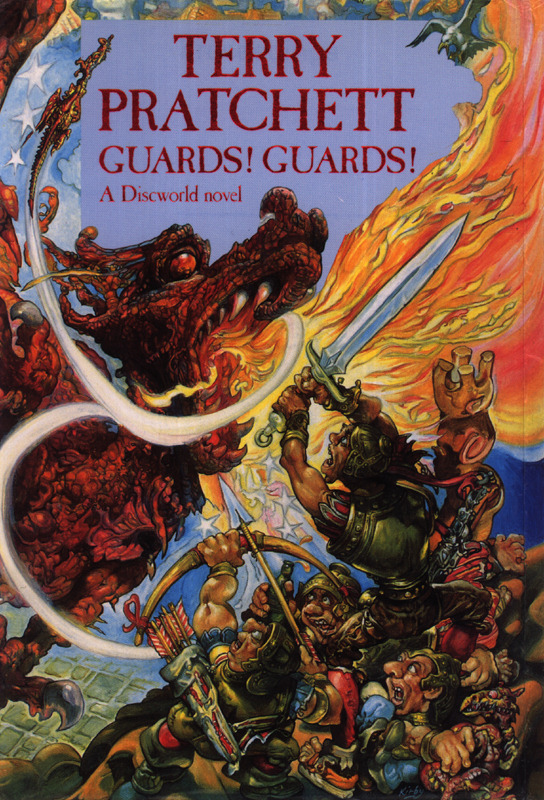
As any reader knows, there something powerfully magical about large concentrations of books. As Terry Pratchett wrote in Guards! Guards!:
A good bookshop is just a genteel Black Hole that knows how to read

Libraries and bookshops are entries to L-space, and in L-space, anything can happen.

July 17th, 2013


Beaconsfield Library may not be big, but it’s special to Pratchett. As he tells an audience of around 70, crammed in on the hottest day of the summer, he didn’t like school; so he came to the library to read. A lot. Wycombe library down the road was bigger, but it was full of ‘fierce women in leather corsets’ who wanted to tell him what books were ‘suitable.’ At Beaconsfield, he could read what he liked. And he did.

He read his way through all the bound volumes of Punch, learning from the masters of humour. (“You’ve taken them away? Where did they go?” he protests, when one of the librarians admits they no longer have them.)

Before Punch, it was The Wind in the Willows. (“I read that three times, one after the other. I realised it was made up. It was one big lie. And it was better than the truth.”) And Moomintroll. And 1066 and All That.

“You grow up when you start to read grown-up books. Always read books that are a little bit too old for you,” he tells the children in the audience.

He wrote his first short story for a supply teacher, which was then published in the school magazine. “The kids loved it and the headmaster hated it. It was great!” Not long after, he ran away from school, became a journalist for the Bucks Free Press, and had the story published in Science Fantasy Magazine. “And I was down the slippery slope. You read until your head is full to bursting, then God puts a finger on you, and you’re a writer.”

These days his illness necessitates that he uses dictation software (Talking Point and Dragon Dictate) to write his novels. He and his assistant, Rob, (“some days I feel like Drumknott, other days like Willikins...”) swap stories about training the American-written software to write arse not ass.


“We created our own command in Talking Point,” Rob tells the audience. “Get the Cleaners is supposed to remove all the formatting from a piece of text. Sometimes I can hear Terry’s voice in the office. ‘Get the cleaners. Get the cleaners. GET. THE. CLEANERS.”

“I’m not so sure computers don’t have souls,” says Pratchett. “They might be arse-souls...”

Someone from the audience asks who Pratchett’s favourite Discworld character is, and the answer comes back without hesitation:

“Tiffany Aching. I fell in love with her.

“It’s when a character starts acting as if they were living. That happened with Granny Weatherwax too. And Sam Vimes. If I wind him up, he’ll keep going so long as I keep him fed.”

Another Lancre resident had their origins not far away. “The lady who became Nanny Ogg came from Beaconsfield Old Town. She’d been a foundling and her life had been hard, but she was always cheerful. She had a laugh like a drain. My parents would take her out to dinner and she’d always go with them, even if she’d just had her dinner. And she sent my Dad girly pictures at Christmas.”

Writers are pack rats, he says, always picking up interesting things. But there is a darker side to it too.

“It’s what I call the Black Mill. When my father was dying and my mother was weeping and I was comforting her – there was a part of my brain that was going ‘so this is what it’s like...’ It’s all grist to the Black Mill. It’ll be used sometime.”

People write asking where he gets his ideas from but there really is no shortcut. (“You did once write a letter back saying, ‘there’s this little shop in Basingstoke...’” Rob reminds him. Pratchett chuckles. “He’s probably still out there, looking for it.”)

A young audience member asks what his advice for young writers is. “WRITE!” comes back the answer. “And have a second string to your bow so you can make some money.”

What does he do when he’s not writing? “What’s ‘not writing’?” he retorts, which leads off into stories of the gadgets he has used over time so he can write even when he away from his desk. A Toshiba Libretto. Palm Pilots. Blackberries. Toilet Rolls... (“I keep everything,” Rob confesses.)

Would he like to live on Discworld? “It doesn’t exist,” he stage whispers – and then he relents and says, yes, so long as Vetinari was his friend (which sounds entirely reasonable).

Having just emailed Pratchett’s current work-in-progress, Raising Steam, to their editor, Rob has an extract on his phone. He reads a page or two, from where the residents of Sto Lat witness the inaugural journey of Discworld’s first steam train. In the front row is a young boy with a steam train on his t-shirt, who seems to embody all the small boys in the story who stand goggle eyed while “the bystanders become by-runners and they by-stampeders...”

Then Pratchett returns to libraries and to L-Space.

“I came here because I support libraries and I support librarians. Google is good. We Google like nobody’s business. But Google is only good if you already know what you want to look up. You can’t browse Google.”

He looks sternly at one of the librarians.

“Libraries should be full of books. Old books.”

The money raised from ticket sales is go, at Pratchett’s request, to the library. “And not some central pot. This library. You can buy back some of those copies of Punch!”

Clearly those missing volumes are a sore point. But until they’re retrieved, any budding writers in the library could do worse than learn from a modern master– Terry Pratchett, creator of the Discworld.


You can read Catriona Troth’s personal exploration of Discworld in Travelling Widdershins.

Travelling Widdershins: an exploration of Discworld

by Catriona Troth

It began with The Colour of Magic, and I know more than a few people for whom it ended right there. But they really don’t know what they are missing. 

Sure, The Colour of Magic and the first few books that followed it were not much more than silly pastiches of the Dungeons and Dragons school of fantasy novels – full of ridiculous names and faintly childish jokes.  But the first time Granny Weatherwax flew onto the scene, in Equal Rites, one caught a hint of something much deeper. By the time Samuel Vimes stepped out to patrol the streets of Ankh Morpork, in Guards! Guards!, it was clear that here was a writer of exceptional skill who was using his powers to make us laugh at ourselves.


Terry Pratchett’s Discworld is an amalgam of myths and legends from across the world. One gets the feeling that his magpie mind has been collecting every fable, proverb and old wives’ tale he has ever heard and systematically deconstructing and recombining them in unexpected ways. It boggles the mind how he keeps track of it all, but you’d be hard pressed to find even small inconsistencies in the canon.

Within that world, Pratchett creates characters for whom one can have a deep and lasting affection.  The witch, Granny Weatherwax.  Sam Vimes, Commander of the Watch.  CMOT Dibbler, ‘Ankh Morpork’s most enterprisingly unsuccessful business man.’  Death.  The Librarian ... If you are a fan of the Discworld, just the mention of those names will be enough to raise a smile. Each one is a fully fleshed out character, eternally the same in their essentials, yet allowed to develop and change over time.


Pratchett has worked with my former maths professor, Ian Stewart, and biologist, Jack Cohen, on four Science of the Discworld books – where the puzzled wizards create a globe like ours as a laboratory experiment and try to understand the strange behaviour of a world that isn’t ruled by magic.

Above all, Pratchett has turned out to be a brilliant satirist – a Jonathan Swift for the 21st Century, using the Discworld to turn his sights on politicians, racists, misogynists, corporate greed and all manner of institutional stupidity.

This is a man who can write (in Small Gods):
Fear is a strange soil. Mainly it grows obedience like corn, which grows in rows and makes weeding easy. But sometimes it grows the potatoes of defiance, which flourish underground.

Or (in Carpe Jugulum):
Sin, young man, is when you treat people as things. Including yourself. That's what sin is.

Even if you are not a fan of the Discworld, it can hardly have escaped your attention that Terry Pratchett is the victim of early onset Alzheimer’s.  It is our great good fortune, as readers, that so far, this has affected the author’s sight and coordination, but not the brilliant, twisted mind that can still spin words into pure gold. 

But as he knows only too well, this cannot be the case forever.  He has become a champion of the right of the terminally ill to chose the time and manner of their own deaths.  The roots of those convictions go back long before his own diagnosis, however.   One suspects that Granny Weatherwax was voicing Pratchett’s own views when, in Carpe Jugulum she reflected that:

“There was a story under every roof.  Stories that were never to be told.  About those times when medicine didn’t help.  When people were simply in a prison made of flesh.  At times like this, she could let them go.  You didn’t push them out of the world.  You just stopped the world pulling them back.”

For me, the acme of Terry Pratchett’s writing is the time-travelling novel, Night Watch.  A powerful magical storm throws Sam Vimes back in time, to a point before the earliest of the Discworld novels, when he himself was a young copper, still wet behind the ears.  Only a handful of familiar characters are to be found, at first unrecognisably young.

As with so many of Pratchett’s books, it’s full of familiar tropes.
“You’re thinking: I’m back in time and damn me, I’m probably going to end up being the sergeant that teaches me all I know, right?”

But you can be equally sure that those tropes will be subverted, turned on their head, and delivered in a way that makes them seem as if no one has ever thought of them before.

Pratchett loves to play with language and there is nowhere he does it better.  How’s this for a phrase describing a man who rarely listens to anyone else?
Ridcully gave him the slow blank stare used by those with acute uptake-grasping deficiency.

Or this for summing up the dark narrow buildings of inner city slums?
You got second-hand light once the richer folk in the taller buildings had finished with it.

I’ve never done an English degree or a Creative Writing MA; so I’ve never been taught the art of close reading. For a writer, I suspect I’m rather poor at analysing why one book blows me away while another leaves me cold. But I have the audiobook of Night Watch on my iPod.  I have listened to it so many times that I can see how it was constructed, how each cog fits together perfectly to make the whole thing work.  I swear there isn’t a single throwaway line in the whole book. Every incident, every joke is part of an intricate mechanism that shapes, not just to the denouement of this book but the whole of ‘present day’ Ankh Morpork as we have come to know it. 

If you are one of those unfortunates who read Colour of Magic and maybe The Light Fantastic, and then gave up on Terry Pratchett, I suggest you forget about those early books and dive in with something like Thud! or Monstrous Regiment or Going Postal. Taste the master satirist at the height of his powers and if that persuades you, explore the rest of the Discworld from there.

And if that fails to persuade you, I despair.  I really do.

To read 'Origins of L-space', Catriona Troth’s account of Terry Pratchett’s visit this summer to Beaconsfield Library, click here.

Monday, 1 July 2013

Random Penguins - Tom Weldon


Today's book news reports that Tom Weldon has been appointed as Chief Executive of Penguin Random House UK.

Here's an extract from our 2012 August cover interview with the man himself. Congratulations, Tom!

Tom Weldon, CEO of Penguin UK

At Penguin’s Head Office on the Strand in London, with a glorious view over the Thames, CEO Tom Weldon took time out of his hectic schedule to talk to JJ Marsh.

Can you start by telling us how you got here? What are the qualities you think propelled you to such a position? 

I’ve worked in publishing for 26 years. I was a trainee at Macmillan and I come from an editorial background, which is unusual as most CEOs come from finance or sales. I also worked at William Heinemann, and now Penguin for the last fifteen years. I’ve been CEO for two years. From my very first moment, I loved publishing. It takes you to so many different worlds through authors and I find that absolutely fascinating.

I’m a gambler. In my private life, I’m mad keen on horse-racing, I love casinos. In a way, I think you have to have a gambling instinct in publishing, but you’re betting on something rather more important than horses or cards. What could be more important than books and authors?

As for whether I’ve been successful, I’d say that as well as a gambling instinct, I’m also very curious. I care passionately about books; everybody at Penguin does. I’ve also been very lucky. I’ve only ever had two bosses in my career and they’ve both been remarkable women. Philippa Harrison, and in particular, Helen Fraser who taught me not only how to publish, but how to manage people.

What do you see as the chief impact of the scrapping of the Net Book Agreement in 1997?


It’s brought books to a wider range of people. It opened up the distribution of books, particularly in supermarkets. Of course, there have been some dangers, but overall, it has helped to democratise books.

Recently, you said: ‘Our industry is going through more changes now than it has for the past 300 years.’ As a trade publisher, is that exciting or intimidating? 

(Laughs). Definitely both. I think we’re going through massive structural changes, above all with the growth of online retail and the growth of e-books. That’s putting enormous pressure on bricks-and-mortar bookshops. And also the whole transition from physical to digital. Geographically, we’re becoming more and more one global market. We use this term ‘frenemies’, where our customers can both be our friends and our enemies. We’re increasingly faced by disintermediation; it’s not just other publishers who are our competitors. It could be, for example, gaming companies in the children’s area. So there are many threats.

But it’s also incredibly exciting. There are positive benefits from this. I think the appetite for reading will never, ever go away. It’s incredibly resilient. What’s exciting is that we can bring great writers to a wider audience. There are constraints, but storytellers can now use different media to tell their stories. Flexible, adaptive channels can and will be hugely successful.

So that’s the situation now. This issue of Words with JAM looks at the future. Management Today quoted you as saying, ‘There are obvious icebergs ahead’. Which are the biggest?


The pressure on paper books. There’s a perception in publishing, or paranoia even, that physical books will disappear. I don’t think that’s the case because books are objects people want to own. They are beautiful, and I’m not just talking about coffee table accessories. However, margins on physical books are incredibly thin. 25% of the UK market is now e-books and that could tilt the balance. Worldwide, ten million square feet of bookseller space has been lost in the last year. The downward pressure on pricing is bad news for everyone, and worst of all for authors.

And how’s Penguin responding?

Regarding the digital transition, 15% of Penguin UK’s market is e-books. The production department can produce both e-book and paper, enhanced e-books and apps. We’re developing new skill-sets. We have a data insight hub to share with our authors. We’re publishing our authors on multiple platforms. We’re a consumer-facing brand and want to move our marketing model from display to discovery. Working with venturethree, we’re finding ways of helping consumers discover our books. Just a few examples, through pop-up shops, branding of e-books, the use of idents and using Penguin’s own social media, which has 2.5 million users, as channels of communication. Our brand is a crucial tool, as is our ambition and imagination.

So surely that must change the staff profile. Anthony Forbes Watson (Pan Macmillan) said, ‘Publishing will migrate from an industry for arts graduates who can count into science graduates who can write a paragraph’. I gather you have another view.


(Laughs). There’s always been this misperception of publishing, you know, it’s full of arts graduates. That’s not so. We’ve always needed marketers, sales specialists and so on. New skills we’re trying to cultivate include data management and online communication, children’s specialists, and looking beyond books to consumer products. We’re recruiting diverse individuals to reflect our community.

Do you see a greater likelihood of partnerships, such as your collaboration with Mind Candy to bring out the Moshi Monsters books and apps? Or the Razorbill/beActive event?


We’re very proud of these collaborations, as we’re always hunting for great creative talent. In fact, in our search for digital storytellers, we’re interested in developing our own IP.

This is the Genesis project? Will you expand on that?

Of course. It’s about authors. Authors are the heart of what we do. Let’s be realistic; they pay our wages. Especially as authors are marginalised in today’s market. We’ve created an incubator – a small team of creatives – in the children’s area to generate stories, brands, identities and interactive websites. It’s still early days, but we’re enthusiastic about the potential.

How do you feel about the expression ‘dead tree books’?


What does that mean?

Paper as opposed to digital.

Oh, I hate that!

Me too. And apparently it’s a misnomer anyway.

It is. I’ve never heard that description before, but I hate it. Penguin, like most big publishers have a strict policy on green issues. For instance, we have a long relationship with The Woodland Trust with whom we’ve planted a Penguin Wood. Besides, that’s such a pejorative way to refer to a book. I believe production values are vital in creating something to be admired. That’s where a paper book can excel. Something we want to touch, to own. Look at these. (Indicates one of the shelves behind his head which holds reissued Penguin classics.)


Yes, I’m so covetous of those. You said you’re a gambler. Regarding publishing and the future, where would you place your bets?

On authors and books. On storytelling in all its various forms. Publishers who embrace change are the ones who will thrive. Tastemakers and curators need to be dynamic, flexible and fearless, and to listen to readers. I’m always open to new ideas, but with every kind of book, I’m betting on the very best writers. The format may change but it’s still the content that counts.


JJ Marsh is the author of The Beatrice Stubbs series, reader, Triskelite, journalist, Nuancer, reviewer and blogger. Likes: pugs, Werner Herzog and anchovies. Dislikes: meat, chocolate and institutionalised sexism.